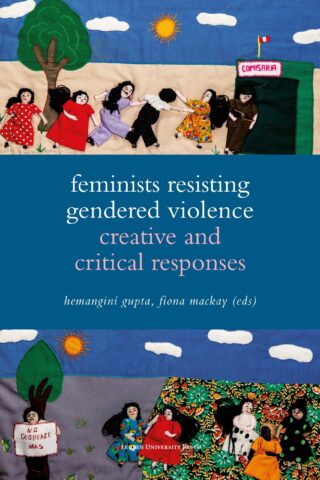
Feminists resisting gendered violence
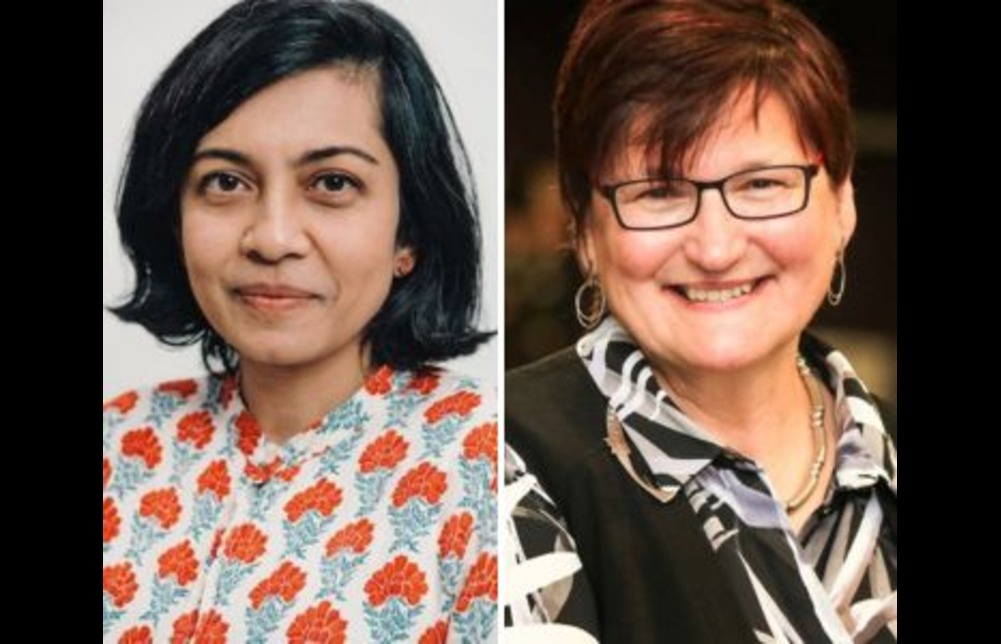
Hemangini Gupta and Fiona Mackay. Photos contributed by each.
To start the 16 days of activism against gender-based violence, and mark today's international day for the elimination of violence against women, GENDER.ED sits down with Hemangini Gupta and Fiona Mackay to discuss their new co-edited volume, which is just out with Leuven University Press.
What's the book about?
This book asks: how have feminists addressed gendered violence? As a form of violence that’s both spectacular and hyper visibilized, as well as ubiquitous, normalized and routine, it presents many challenges. For more than fifty years, feminist movements, locally and transnationally, have broken the silence and stigma surrounding gendered violence. They have honoured and amplified the voices of victim/survivors, and provided shelter, care and support. Over the long haul they have raised awareness and demanded change. Action has taken many forms: some feminists have felt the need to visibilize, calibrate, and account for violence within institutional processes so that policy and law can respond to the scale and nuance of these forms of violence. For other feminists, the law is a site of violence itself; they ask how else might we imagine justice? Feminists have turned to art, installation, poetry, music, and film to respond to gendered violence, to recognize and name it across historical periods, and to address trauma and harm. Feminist scholars have also asked critical and probing questions about how we frame the object of violence recognizing that issues like “consent” and “victim” tend to naturalize some assumptions and subjects over others.
These are tricky questions and they are at the heart of a six-year Blogathon project (2018-23) that was run collaboratively between the University of New South Wales, Ambedkar University, Delhi and the University of Edinburgh. This anthology presents a curated sample of those blogs to showcase the range and critical depth of transnational thinking on violence. In it, you’ll encounter movements for justice, artistic and creative responses, scholarly thinking, activists making ‘good trouble’, and feminist re-imaginings of what justice might look like.
What or who inspired you to choose this topic?
We were inspired to launch the original blogathon by the generations of feminist action against gendered violence as exemplified by the global campaign 16 Days of Action, which runs each year between November 25th (the international day for the elimination of violence against women) to December 10th (Human Rights Day). After six years, more than 140 posts, and readers from over 100 countries we wanted to curate a capstone or legacy anthology. We felt that the richness of the collection of essays and images deserved a more permanent platform to be shared with as wide an audience as possible
Did the book turn out the way you imagined it?
The book is so much more meaningful and beautiful than we could have imagined. As we have each been readings through the proofs, we notice the striking range of essays. For example, you might read a piece on the need to correctly “account” for violence, and another documenting a long-term feminist action project against street sexual violence, and then a third about a refugee artist reflecting on her historic relationship to violence, fleeing a war-torn country, and her journey towards healing. Writers wear many hats, academic-poets, activist-artists, survivor-researchers and so on. Rather than take one stand or approach to gendered violence, as curators we have taken an ecumenical approach seeking to include a diversity of views. So, the reader will encounter policy makers, feminists in government, artists, activists, academics… they might hold divergent and even conflicting approaches to how best to tackle gendered violence but this generative tension is what makes the book so powerful!
What impact do you think the book can have?
This is a chilling moment when political contestation around gendered violence is rolling back rights and protections around the world. We – and our co-curators in Australia and India – want the collection to contributes to the ongoing campaign as exemplified by the global 16 Days of Action to keep the issue of gendered violence in view, and to assist in feminist efforts to challenge, resist and demand action. The book helps us to understand the local complexity of gendered violence, and to reflect critically on why there might need to be context-relevant and historically sensitive approaches to naming and addressing gendered violence. Finally it highlights the importance of feminist collaboration across borders.
How do you think the book can shape future research in your research field?
The book already takes forward three important strands of feminist thought that are not always brought together and advances them in new directions. First, it takes on the debates around how we name violence. When have people used Gender Based Violence (GBV) and why do some feminists now insist on the term gendered violence? We take up that question by addressing how violence comes to occur through local and everyday mechanisms. Second, we take up the challenge that Saidiya Hartman posed when she asked how we might talk about violence without repeating its force. We approach violence by showing it, but also thinking about the reparative and healing work that might emerge in its wake. Finally, we ask how we might be feminists working within institutions that are often colonial, patriarchal, and violent themselves. Anna Bull’s piece speaks to the theme of “slow activism” and we take this up through essays that reflect on decades’ long movements around domestic shelters, and on campus student activism.
.