
Book Forum: Hemangini Gupta's Response to Readers - Experimental Times
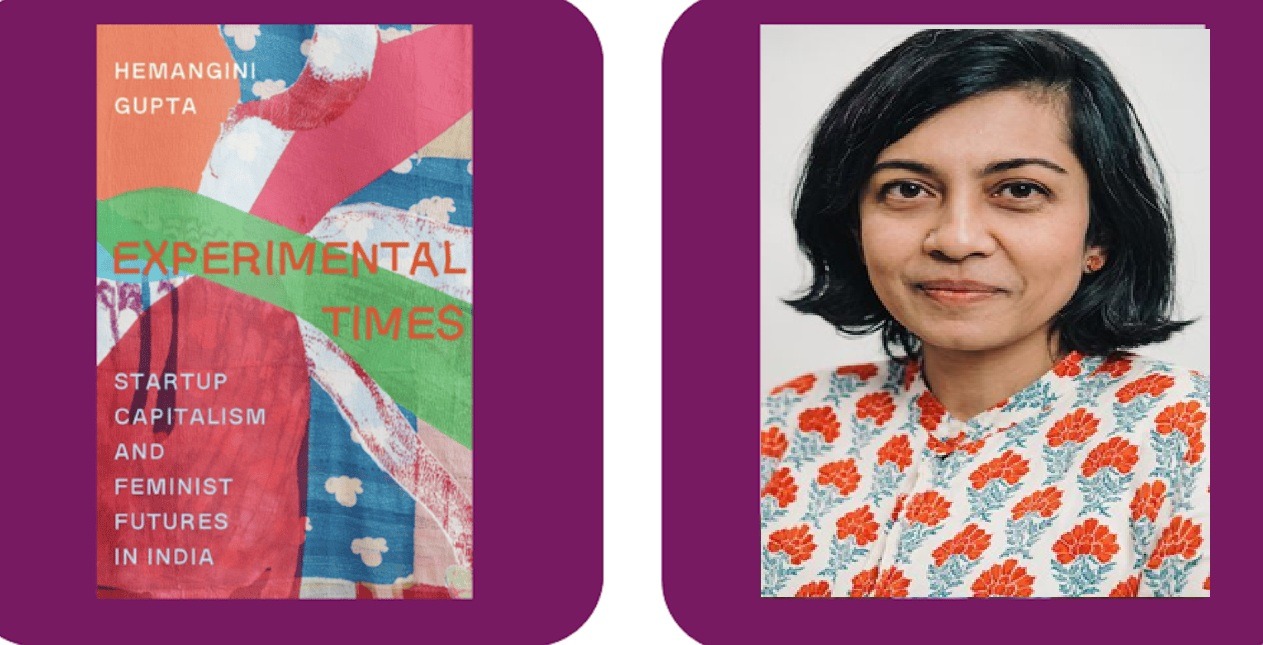
When you write an academic book you don’t always have a sense of whether anyone will read it and how they will engage it so I am deeply grateful to have had at least three readers. Hearing and reading their generous and productive engagements with Experimental Times helps me see how its arguments travel and what new relations they spawn as well.
Janaki, Rahul and Alex are all familiar with the city and have pointed out that the material place-making in the book resonates with them. It was very important to me to show how city life – its blockages, construction, and jams – shapes participation in the city’s startup culture. The everyday frictions of the city help me to theorize how movement across the city is also a movement in the new economy of startups: “from traffic descriptions to theory” as Janaki put it.
I finished writing the book during the height of the COVID 19 pandemic and that has shaped the analytics I relied on. Understandings of gendered and racialized care work being the invisible but essential infrastructure for life to function became commonplace during COVID and I began to see this dynamic as central to work in India’s startup economy as well. At some point I began to wonder how we might overdetermine our own analysis of fieldwork, reading it through the dominant academic lens at the time we are writing. Janaki’s words have helped me see how care has emerged in the book not just as a contemporary frame – instead, she noted that the infrastructures of care become important to note, in their absence and selective presence, because so much unquantified work happens through them. Care is not just abundant and ever-present, it is an infrastructure: one that breaks and fails and works unevenly through gender and caste.
This sense that aspects of care, family, and friendship (important themes in the book) all produce relations that exceed any pre-fabricated understandings of them is centered in Rahul’s words too. Generously, he writes: “The book’s analysis is always intersectional, but more than this, the ethnographic stories it tells are always richer than the available theoretical scaffoldings through which we might try to make sense of them, necessitating a revisioning of those scaffoldings.” There is always more than what is expected; entrepreneurial managers might expect loving workers, invested in the family, but those relations of love and friendship work in unruly ways that exceed what management might have expected.
There is always a more than: not exploitation, but relations produced in its effect; not agency, but forms of freedom and defiance that work through gendered, classed, and caste formations; not respectability but its twisted appearance through caste and class desire... this attention to what else is produced beyond the stated situates the book as an ethnography. Following my doctoral training in feminist anthropology and gender studies, the book owes this commitment to detailing the more than via a longer history of feminist ethnography including the work of Anna Tsing, Carla Freeman, Aihwa Ong, Sareeta Amrute, Kalindi Vora, and Jennifer Patico.
These excesses that move beyond categorical terms, Rahul notes, also provoke intellectual challenges. What does it mean to think of queering social reproduction – when labour power is generated outside the heterosexual household – when the worker’s self is itself the commodity? The book develops what I call labour as method, an approach that names and follows as labour a set of apparently discrete practices that become interrelated through their creation of value. Rahul points to this as a way out of the stickiness of separating realms of productive and reproductive labour in the era of self as commodity. In a book presentation a few months ago, an audience member asked me astutely whether labour as method doesn’t yield all ground to labour? In response I would now point to the importance of labour of method not as subsuming all relations under the sign of “labour” but, as Rahul might suggest, a way of noticing labour when it exceeds categorical limits. And writing this in-between spells of UCU strike action, his words on the stakes of labour’s indeterminacy are particularly poignant: “The reconceptualization of labour by startup capitalism has potentially profound implications for organising and welfare in the workplace, challenging as it does the foundational premises of trade unionism and collective bargaining.”
Experimental Times thus attends to excesses of categories but also, in Alex’s words, to feminist undoing, as women make connections that are used to different ends than management would have hoped. In telling this story, a chapter turns to my own family’s histories, tracking how generations of women before me navigated desires for freedom and independence within larger currents of nationalism and neoliberalism. It’s always a bit embarrassing to narrate elements of a personal or familial history but Alex found that the chapter on family histories turned him back to his own photos and fieldnotes. I hope others too will find interest in this move to situate an ethnographer’s history against the story of a changing place and to consider how a global capitalism is propelled by the stories of the worker’s lives that drive it.
Author biog:
Hemangini Gupta is a Senior Lecturer in Gender and Global Politics at the University of Edinburgh.