
Investigating How Young People Learnt About Queer Identity in Postwar Britain
In recent years, the question of what young people should learn about sexual and gender identity and who should teach them about it has led to considerable anxiety. The media regularly publishes anxious editorials concerning young people and gender identity worrying over the perceived impotence of parents when compared to their children’s peer groups. This highlights two assumptions. The first is that acquiring information on a sexual or gender identity is key to assuming that identity. The second is that young people’s peer groups play a key role in disseminating information on such identities.
Despite its perceived importance, however, few scholars have investigated how historical individuals actually learn about queer sexuality or gender. Instead, the historiography has largely focused on the expression, representation or organisation of queer identity after an individual has assumed that identity. Relatedly, historians of sexuality and gender have tended to focus on the role of ‘macro’ level institutions in society, such as the law, in forming sexual and gender identity. However, as Hannah Charnock argues, this has overshadowed the “local scale between the macro-level of culture and the micro-level of individual sexual selfhood” (p.6). In other words, few historians have explored how family, friends and peers shape an individual’s gender and sexual identity.
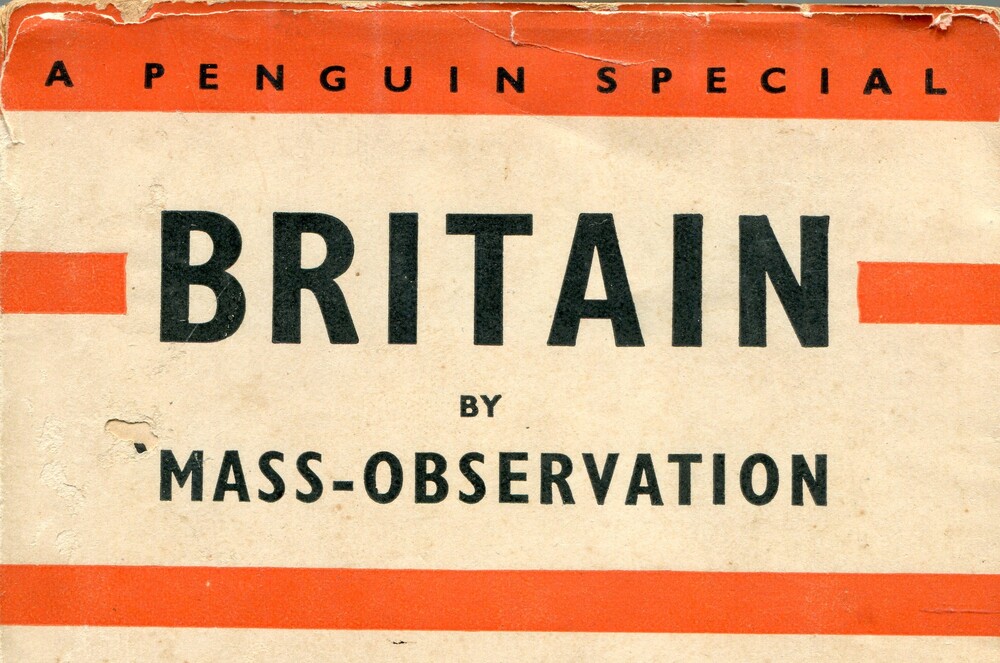
My undergraduate dissertation sought to address this historiographical gap by investigating how young people in postwar Britain first learnt about queer identity. I defined ‘queer’ in this instance as an act, behaviour, characteristic or identity— real or imagined— that was not deemed by contemporaries to be heteronormative. My primary source base comprised life-writing from the Mass Observation Project archive (MOP). The MOP solicits life-writing from a panel of approximately 500 volunteers. I first performed a systematic keyword search of digitised life writing produced by volunteers born between the 1930s and 1960s. This returned around 100 testimonies, which I then read closely for experiences of learning about queer identity. I then analysed broad patterns in how the volunteers learnt about queer identity.
Surprisingly few volunteers learnt about queer identity from newspapers, television broadcasts and medical or legal literature. Instead, most recalled first encountering queer identity through a mentor figure, such as an older friend, relative or colleague. These mentor figures labelled something or someone that they perceived as queer to the volunteers. They rarely labelled someone as queer because they performed a specific sexual act. More often, they highlighted floating signifiers such as the individual’s appearance or behaviour. The volunteers also recalled discussing who or what counted as queer with their peers:
“…a friend pointed out two nancy-boys strutting on the beach in highly coloured attire – my first intimation of homosexuality; I didn’t know what she meant, but it must be rude.”
This implicated the volunteer and their peer group in a shared heteronormativity, constructed in opposition to the queer individual ‘over there’. The volunteers internalised these descriptions of queerness and scrutinised whether they lined up with what they had been told counted as queer. Those volunteers who identified as queer often did not innately know that they were queer. They first had to discover what, according to their peers, defined queerness. They then compared themselves to this definition, trying, often imperfectly, to fit in.
“I would even make my way to The Cossack [a queer venue] in Sheffield, where I furtively sipped a coke or beer whilst watching the punters… like an anthropologist”
Other volunteers recalled engaging in behaviours that we might now label as queer without ever defining themselves as such. This was because they did not perceive these behaviours as lining up with what they had been told queer identity consisted of. For example, volunteers suggested that mutual masturbation between men often did not count as queer because it was “functional”, demonstrating how a masculine sex act was far removed from the effeminate persona volunteers associated with homosexuality.
These findings highlight the need for historians to consider how sexual and gender identities are shaped by an individual’s peer group, in the space between self and culture. They also highlight the unstable and constructed nature of identity. People do not passively inherit an identity from others; it is not a kind of viral vector, spreading from person to person. Nor does identity emerge from an innate inner self. Individuals instead try to align themselves with the many imperfectly fitting identities made available to them by society or by their peers. Having an identity is therefore a far messier process than social contagion or just ‘being’.
Author Bio:
Alexandra Wallace has recently graduated from the University of Edinburgh with an MA Hons degree in History. She is now studying for a History MSc at the University. Her research interests are in Twentieth-century British queer history and the re-use of social science material as a historical source.