
GENDER.ED - EUSA Undergraduate Feminist Trailblazer Awards: Honourable Mentions
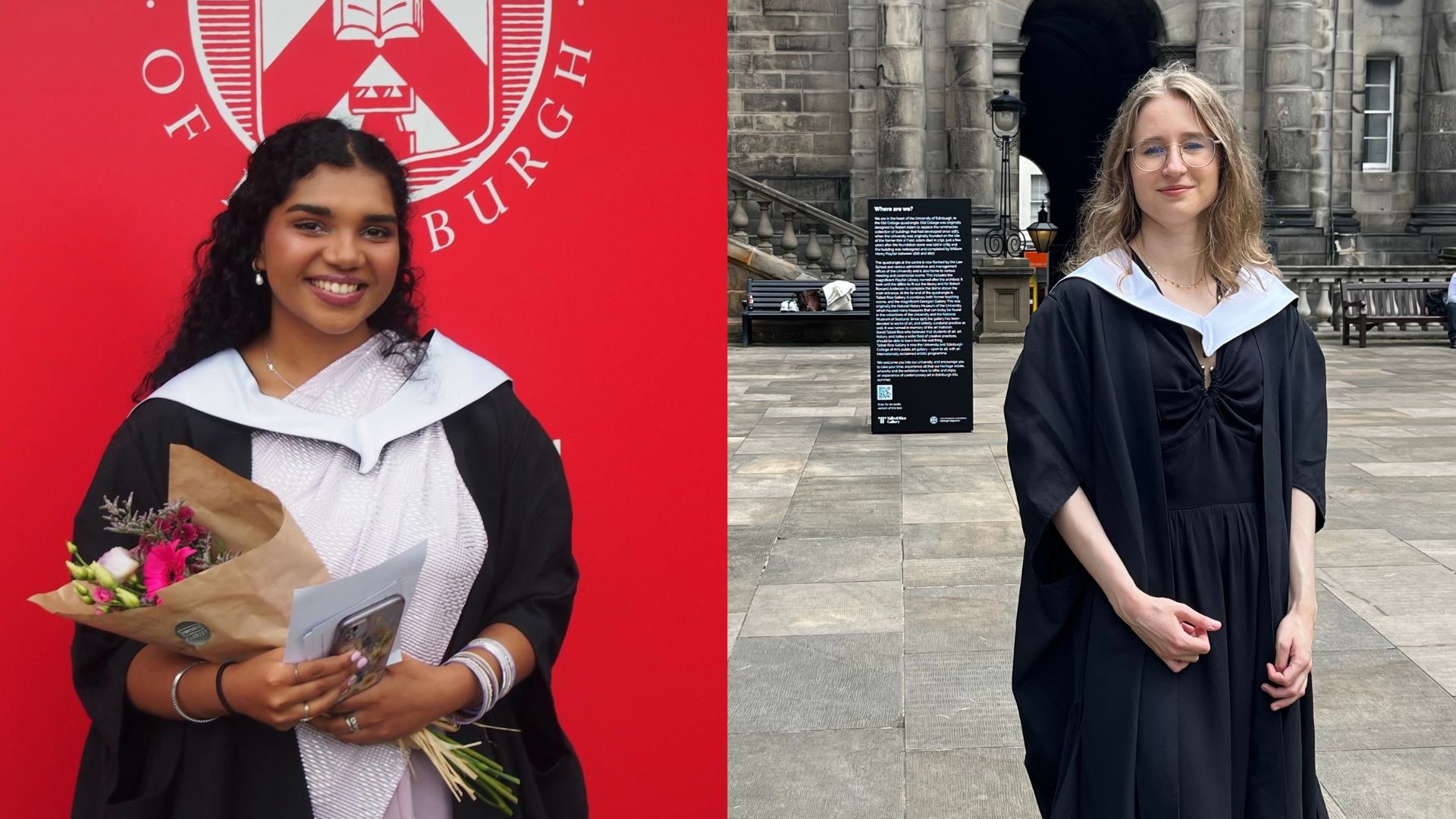
Honourable mentions of 2024’s GENDER.ED-EUSA Undergraduate Feminist Trailblazer Award, Ishita Parakh (left) and Alina Paczesna (right).
2024 marks the third year of the GENDER.ED-EUSA Undergraduate Feminist Trailblazer Awards. The awards seek to recognise extraordinary commitments to feminist scholarship and change on campus. Two honourable mentions of 2024’s GENDER.ED-EUSA Undergraduate Feminist Trailblazer Award are Ishita Parakh and Alina Paczesna. We asked Ishita and Alina to share their thoughts on feminist work and what motivates them.
What does feminism mean to you?
Ishita: Feminism to me is a way of life. It's about committing to a daily practice of equality, justice, and respect for all people, regardless of gender and other inequities. It's a commitment to living authentically, challenging the status quo, and striving to make the world a better place for everyone. It is fighting numerous overlapping structural oppressions entrenched within society to build a better world. I think feminism is not simply a theoretical term delineating the eradication of all forms of gender inequality; as bell hooks propounds- it is a liberatory movement to abolish all forms of inequality. Hence, feminism is more than just a theory, it represents the collectivisation of diverse voices against established power structures towards an equitable and just world.
Alina: Feminism to me is a movement that seeks to bring about a more just world, and a future free of oppression, violence and coercion for all people. Though gender is a core focus, feminism must question and challenge power more broadly to ensure liberation from all systems of oppression, and to bring about justice for all people. Feminism, to me, is also a “tool” that allows us imagine ways of living and thinking otherwise, and helps us envision a future free from oppression.
What motivates your feminist work?
Ishita: People motivate my feminist work. Inequality and oppression in the world motivate my feminist work. I have a very strong drive to change established status quos, so that marginalised/minoritised peoples and communities do not face barriers to their existence and fully enjoy their human rights. The desire to see a world where everyone has the same opportunities, rights, and respect regardless of their gender is a powerful motivator. Having both witnessed and experienced discrimination, I believe (gender) inequality is a pervasive and normalised societal problem. Feminist work is needed to challenge these systemic inequalities. Thus, a sense of necessity and compulsion drives my feminist work.
Alina: My feminist work is motivated by a lot of things, but I think that a strong sense of injustice combined with some hope that a different, better, and more just world is possible are both crucial. I was introduced to feminist activism predominantly through the 2016 Women’s Strikes in Poland, which were a reaction to a proposed total abortion ban. These events, as well as broader attacks on women and the LGBT+ community (among other people) in recent years highlight to me how fragile any sense of “progress” can be, and how much work still needs to be done. Studying Sociology at university has also given me the analytical tools to make better sense of such inequalities and injustices, understand their structural causes, and imagine potential solutions. I am also really inspired by other people’s feminist research and activism, both at the university and beyond, and seeing what others are working on always provides me with the motivation to keep going despite challenges.
Who else do you consider a ‘Feminist Trailblazer’?
Ishita: I think there are so many inspiring women I could list, but I think intrinsically, I consider every individual attempting to better societal or their own repressed conditions a ‘Feminist Trailblazer’. It's important to recognise that feminism isn't just shaped by famous figures, but also by the everyday efforts of countless individuals working toward gender equality in diverse ways. These individuals may not be famous, but contribute to feminist causes in their communities, workplaces, and homes. This includes parents teaching their children about gender equality, activists organising for change, and people challenging gender norms in their daily lives. Another example would be individuals who have experienced gender-based violence and are rallying for their and others’ (human) rights to be free of this violence. Or those women and individuals who find their voices silenced and have not given up on feminist causes despite silencing efforts. Perhaps most importantly, all individuals facing exploitative conditions and remaining resilient under these circumstances are Feminist Trailblazers.
Alina: There are many people who I would consider feminist trailblazers, but the first people who came to my mind when I thought about this question were Natalia Broniarczyk, Justyna Wydrzyńska and Kinga Jelińska from the ‘Abortion Dream Team’, an informal grassroots initiative facilitating abortions in Poland. They are doing really amazing feminist work by providing crucial healthcare in a country where it would otherwise be inaccessible, while also advocating for broader change, including legal reform and an end to abortion stigma. Their work is really impactful – they have helped thousands of people access healthcare and contributed to changing the way abortion is talked about in Poland, while also forging transnational feminist solidarities with other movements for reproductive justice. Their work, and the tangible impacts that it has, really inspires me.
In your opinion, what does a feminist utopia have that our current society is lacking?
Ishita: As much as I would like to say that everything would be free for women, gender minorities, and other marginalised individuals; a feminist utopia is equitable for all. Our current society is plagued with exploitative power hierarchies that cultivate structural oppressions like sexism, racism, colonialism, heterosexism, ableism, classism, ageism, and the like. These structures of oppression do not exist within a feminist utopia. A feminist utopia is rooted in equity, respect, and justice for all people, regardless of gender. It would prioritise the well-being of individuals and communities over profit and power, constructing a world where everyone has the freedom and opportunity to thrive.
Alina: I think that a feminist utopia must be premised upon gender justice, and an end to racial, class and all other inequalities – bringing about a feminist utopia would require radically challenging the current status quo. There is also no placed for any form of violence in a feminist utopia. I also think that there cannot be a feminist utopia on a dead planet, so climate justice, as well as care and compassion towards non-human others and nature more broadly, are also core to my vision of a feminist utopia.