
GENDER.ED - EUSA Undergraduate Feminist Trailblazer Awards: 3rd Prize
2023 marked the second year of the GENDER.ED - EUSA Undergraduate Feminist Trailblazer Awards. The awards seek to recognise extraordinary commitments to feminist scholarship and change on campus. We saw a range of nominations from students and staff which were considered by a panel of judges from GENDER.ED and EUSA. In 2023, the judges were Meryl Kenny (GENDER.ED steering committee member and convenor of GENDER.ED’s flagship course, Understanding Gender in the Contemporary World), Radhika Govinda (Director of GENDER.ED), Hemangini Gupta (Associate Director of GENDER.ED) and Sam Maccallum (former EUSA VP Education).
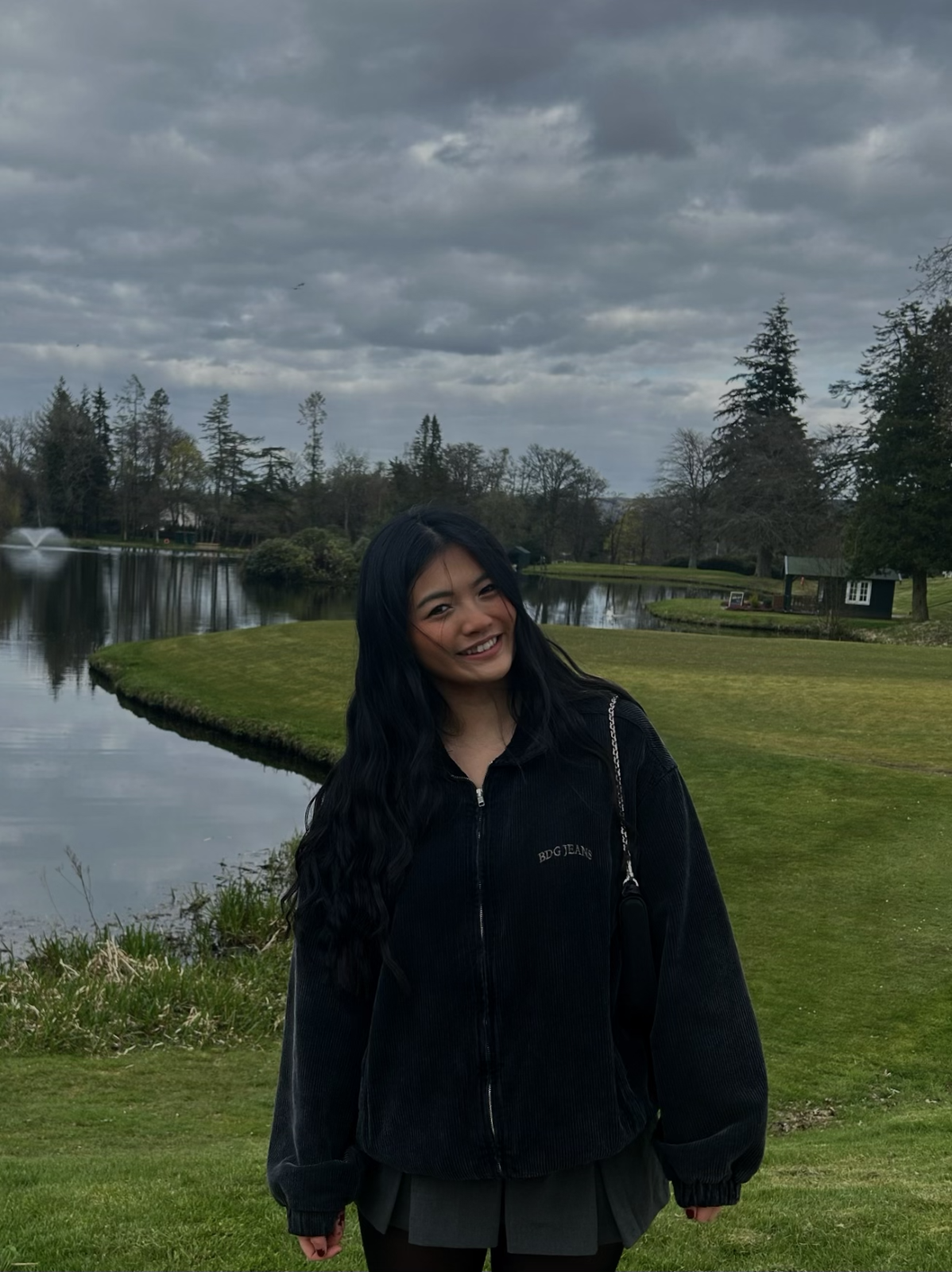
The winner of 2023's third GENDER.ED-EUSA Undergraduate Feminist Trailblazer Award is Maggie Lin (Computer Science). The work that Maggie has contributed to is a fascinating display of historical data on witch-hunting in Scotland. She has publicly showcased her work at the Edinburgh Book Festival, through blogs, and a podcast thus translating the research in critical ways for wider audiences
Here are some of Maggie’s thoughts on questions posed to her by GENDER.ED’s Communications and Events Intern, Amy Life
1. What motivates you to further the feminist cause?
My motivation to further the feminist cause is tied to my recognition of the historical and ongoing persecution of individuals who are labelled as ‘other’ by society. My work highlighting the struggles of individuals, primarily women, accused of witchcraft in early modern Scotland, brings into focus the tragic consequences of fear and misunderstanding, as well as the intrinsic role that misogyny contributed to the moral fervour. I want to highlight the fact that every single figure in the Survey of Scottish Witchcraft database I worked with was a human being, each with lives as intricate as our own, and I feel a responsibility to shed light on these injustices and to challenge the oppressive systems and narratives that allowed them to prosper. Only by acknowledging and remembering the cruelty of the past will we be able to build a more empathetic, inclusive, and just society in the present.
2. What advice would you give to other feminists and students wanting to get involved in activism at the University?
I encourage other students to find a cause that resonates with them personally, as this is a powerful motivator. Uncovering the individual stories of accused witches drove me to raise awareness and to tell their stories using data visualisation. As a computer science student, this is a skill that I could personally utilise, but activism comes in many forms. Everyone has unique skills and resources to contribute to the movement in their own way. It is also important to start with small steps: this could be finding like-minded people, joining groups or societies, or even engaging in conversations to educate yourself and the people around you. Every voice matters, and every action, however small, will be beneficial in the long run to whatever cause you choose to pursue.
3. Who else would you consider to be a ‘feminist trailblazer’?
There are so many people I would consider feminist trailblazers, including amazing role models around me in the form of friends and mentors, but one within the public eye that comes to mind would be Grace Hopper, an American computer scientist who revolutionised modern computing. Her most significant contribution would perhaps be the creation of COBOL, one of the earliest high-level programming languages. Experiencing first-hand the underrepresentation of women in technology in the present day, I cannot begin to grasp the barriers Hopper would have faced back in the early twentieth century when the field was almost entirely male-dominated. She not only proved that women could participate in the field, but that they could excel and entirely revolutionise it. Her persistence and resolve to challenge gender stereotypes inspire me every day.
4. At the moment it can sometimes feel like we are moving backwards as opposed to progressing, what gives you hope that feminism can succeed?
Though it may seem that we are moving backwards instead of progressing, I believe that there is a myriad of reasons to remain hopeful that we are moving towards a more equal society. Even in challenging times, I have noticed an increased emphasis on intersectional feminist education, creating a more informed and inclusive society. I am also able to witness firsthand the effects of the remarkable contributions of activists around me, including all the nominees and winners of this award. Though it can seem that we are regressing, especially in recent times, I think it is vital to focus on signs of progress. Progress is never linear. It necessitates patience, determination, and hope. Therefore, I believe we should appreciate how far we’ve come when it feels hopeless, even if we know there are still many battles to be won.