
“I want to let the Wild Man out!”: Mythopoetic Men’s Movement and crisis in masculinity

“Fifties males”, “soft males”, “Wild Man”. Robert Bly (1926-2021), an American poet and translator, used these categories to define what it meant to be a man in his contemporary American society. More than that, by distinguishing these categories, Bly proposed to read masculine identities as subject to evolution and change. Bly postulated that the “fifties male” embodied a traditional understanding of masculinity as he was expected to “like football, be
aggressive, stick up for the United States, never cry and always provide”1. By contrast, Bly saw the “soft male”2 as a response to the violence of the Vietnam War and the significant influence of feminist movements. Bly criticised this last category of men for their lack of masculine energy, making them ‘stuck’ in the feminine part of their consciousness. What does this evolution of masculinities from one end of the spectrum to the other reveal about men and their identities?
Bly’s examination of “what’s been going on with men”3 allows for a study of the recurring idea in men’s movements’ circles, that masculinity is in crisis. Bly is one of the fathers of the mythopoetic men’s movement, which proposes to remythologize and reimage masculinity, men and their identities, which these authors see as threatened by industrialization, the increasing absence of father figures, the loss of male companionship and more importantly, men’s loss of ability to think mythologically, combined with overbearing feminine energies (also described as a new “hardness” in women brought by feminist movements). Regular references to myths and fairytales emphasise the mythical dimension —Bly goes as far as to label his masculinity “Zeus energy”. What is striking is that, despite the consensus that men have lost their ability to think mythically (because of technology, industrialisation, capitalism…), thinkers (Meade, Bly) do not give a clear definition of what it entails. Yet, masculinity is deemed a legacy. Mythical images are perceived as strong and reliable for having guided a plethora of men throughout centuries. They are also a tool to guide men in visualizing and reaching the Wild Man.
Examining Bly’s legacy through the mythopoetic men’s movement means analysing the extent to which masculinity is perceived as being in crisis by the men participating in such groups. The concept of crisis presupposes a monolithic view of masculinity, negating the plurality of masculine identities. It assumes that, at some point in history, masculinity was stable and unified. The notion of masculinity in crisis also needs to be thought of in terms of its gender politics, as mobilising such a discourse could affirm and strengthen a particular masculine way of being.
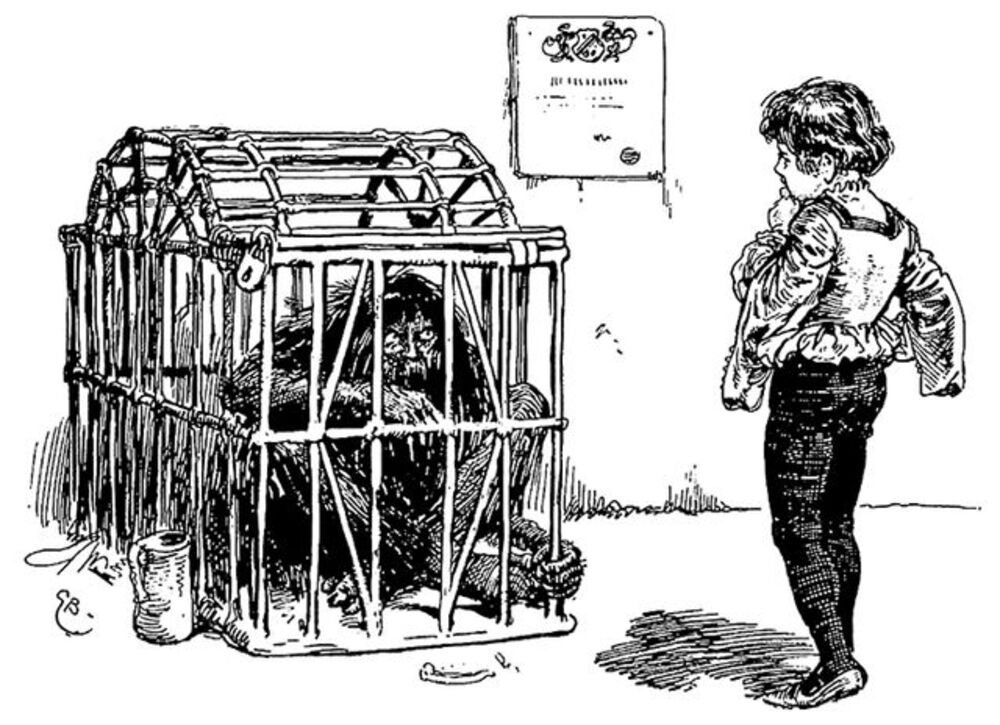
Indeed, the mythopoetic men’s movement promotes a new masculine ideal named the “Wild Man”. Mythopoeism invites men to embark on a journey of self-discovery, emphasising the need for them to uncover the masculine part of their psyche and welcome the “ancient hairy man” found at the bottom of their “deep masculine”. The Wild Man is a mythopoetic archetype, rooted in Jungian psychology, which inspires a journey of self-reflection and transformation. Bly wrote that “the deep nourishing and spiritually radiant energy lies not in the feminine side, but in the deep masculine”4. The Wild Man embodies a healthy masculine spirituality, encouraging men to transcend the feminine aspects of their psyche so that they do not become “soft”.
The idea of a crisis could also help favour a vision of masculinity as wounded. This wound is pervasive and impacts other areas of society. The idea of a mythological collapse that contributes to a state of crisis for masculinity is at the core of the mythopoetic discourse. Bly extensively exploits the concept in his bestseller Iron John (1990):
We have defective mythologies that ignore masculine depth of feeling, assign men a place in the sky instead of earth, teach obedience to the wrong powers, work to keep men boys, and entangle both men and women in systems of industrial domination that exclude both matriarchy and patriarchy.5
Promoting a wounded masculinity also emphasises the urgency of the mythopoetic task in uncovering the Wild Man and revisioning the masculine identity. It appears to encourage a depiction of the masculine as vulnerable, raising the question of a possible male oppression and urging a revision of the position of men in the patriarchal order.
Critically examining the mythopoetic men’s movement means navigating the complexities of a presupposed crisis in masculinity without reinforcing or reifying it6. It requires a careful analysis and interpretation of the emotional dimension of participants’ experiences in mythopoetic groups, while situating these practices and discourses within the broader field of gender politics. Why does all this matter? Ultimately, the mythopoetic figure of the Wild Man reopens and deepens the discourse around masculinity in crisis, offering an alternative masculine archetype which could be framed as a potential model for addressing or resolving the perceived crisis in contemporary masculinities. By examining this model, we gain insight into how contemporary constructions of masculinity are being mobilised in response to broader sociocultural anxieties.
Bibliography:
BLY, Robert. Iron John : A Book about Men. Longmead: Elements books, 1991. 268 p.
BLY, Robert. MEADE, Michael. On Being a Man. Available at: https://www.youtube.com/watch?v=Uk6Xpvp68S0&t=3096s
DUPUI-Déri, Francis. La Crise de la Masculinité : Autopsie d’un Mythe Tenace. Paris : Points, 2017. 384 p.
EDWARDS, Tim. Cultures of Masculinity. Abingdon: Routledge, 2006. 180 p.
GOURARIER, Mélanie. Alpha Mâle: Séduire les femmes pour s’apprécier entre hommes. Paris : éditions du seuil, 2017. 230 p.
THOMPSON, Keith. “What Men Really Want: A New Age interview with Robert Bly”, New Age Journal. Issue n°84, 1982. Available at: https://justaddfather.com/
Author Bio:
Justine is a PhD Candidate at the School of Divinity. Her research project explores the relationship between masculinities and spirituality. She is researching the mythopoetic men’s movement and its evolution in contemporary society. More precisely, the development of a “masculine spirituality” to “heal” a “wounded” masculinity.