
GENDER.ED Annual Research Showcase 2025
Kaveri Qureshi, Associate Director of GENDER.ED, reflects on this week’s Annual Research Showcase - the highlight of the yearly calendar for GENDER.ED's community – and the different levels at which we see that the work of GENDER.ED matters.
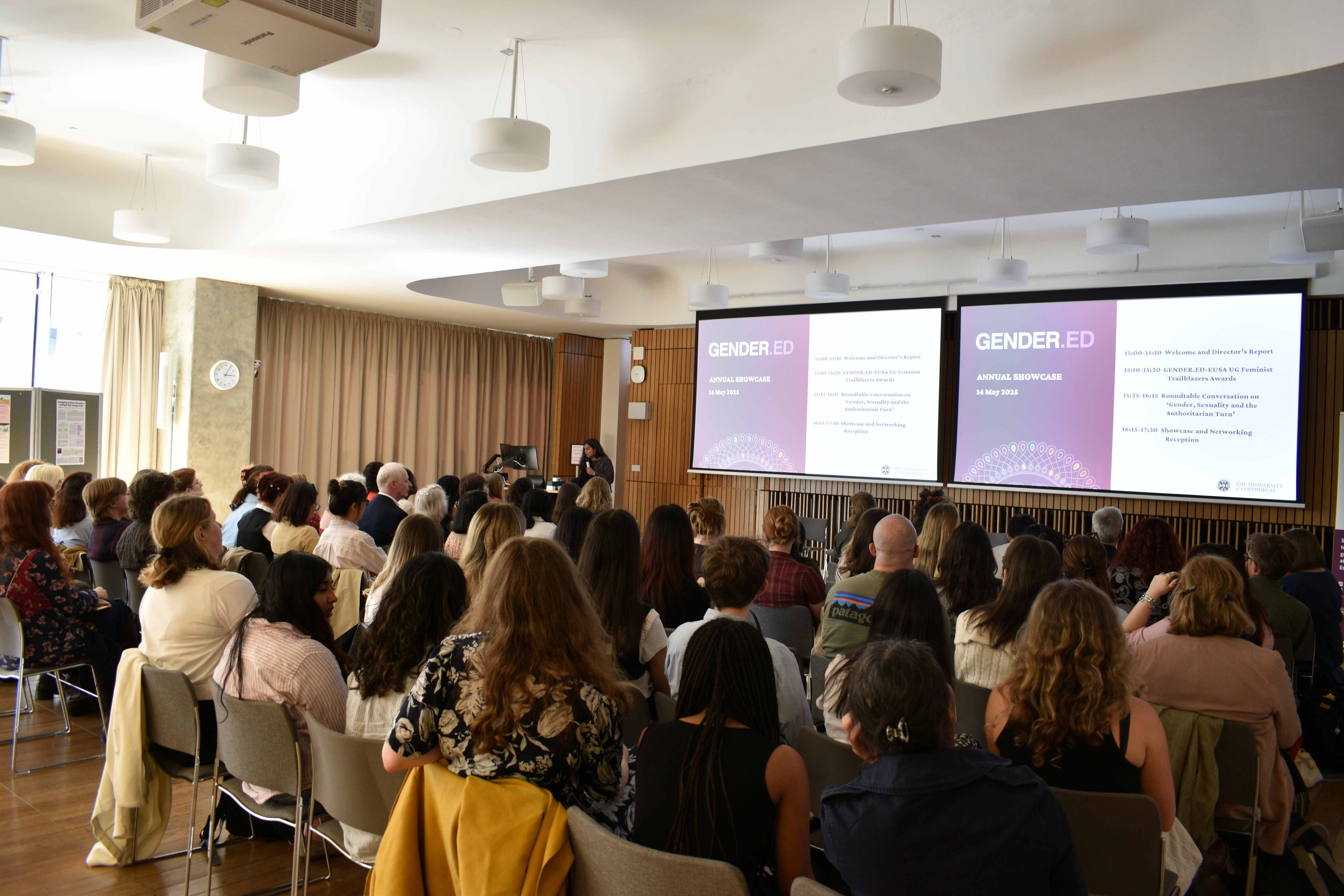
On Wednesday afternoon earlier this week, GENDER.ED hosted its Annual Research Showcase. Attended by more than seventy staff and students this year, the Showcase is the highlight of the calendar for GENDER.ED's community in terms of dialogue and forging connections with gender and sexuality scholars across the whole university. This year for the first time, in addition to PhD researchers and staff research, we were able to incorporate a Mini Undergraduate Dissertation Showcase, making the 2025 Showcase uniquely non-hierarchical and cross-career. The appreciable contingent of undergraduate research and change projects brought distinct energy into the room.
The Showcase began with Dr Radhika Govinda's Director's Report, which captured the breadth of teaching, research and research training, and knowledge exchange and networking activities that GENDER.ED supported, organised or amplified in the last year. Radhika ended with a surprise: the gift of a book of messages for Professor Fiona MacKay, as a token of thanks and appreciation from the GENDER.ED team past and present, for her work as GENDER.ED Founding Director ahead of her upcoming retirement. The messages Radhika read out were very moving, but Fiona's spontaneous response all the more so. Though she had not known this was coming, Fiona spoke so meaningfully about the importance of GENDER.ED as a space to share our differences and try to find common ground.

Radhika then announced the winners of the GENDER.ED-EUSA Undergraduate Feminist Trailblazers Awards 2025. The joint first prize went to Rutendo Hoto and Claudia Efemini for their co-founding of Black Women* at Edinburgh Society. Thulsa Miqdhaadh Moosa and Aagoon Chakraborty won second and third prizes, and Emmi Wilkinson an honorable mention. We’ll hopefully get to hear from each of them individually via the GENDER.ED Blog next academic year, so, please watch this space!
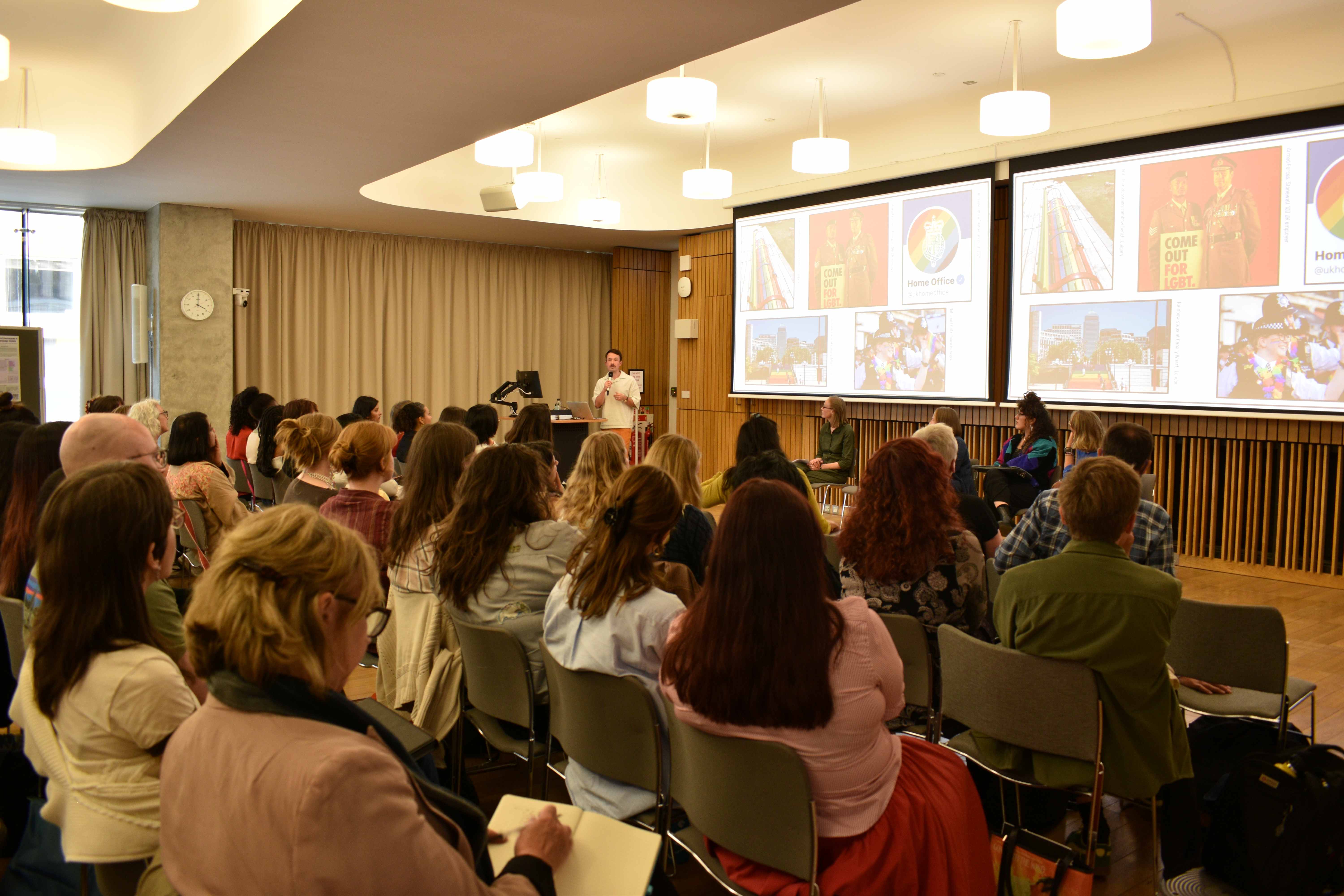
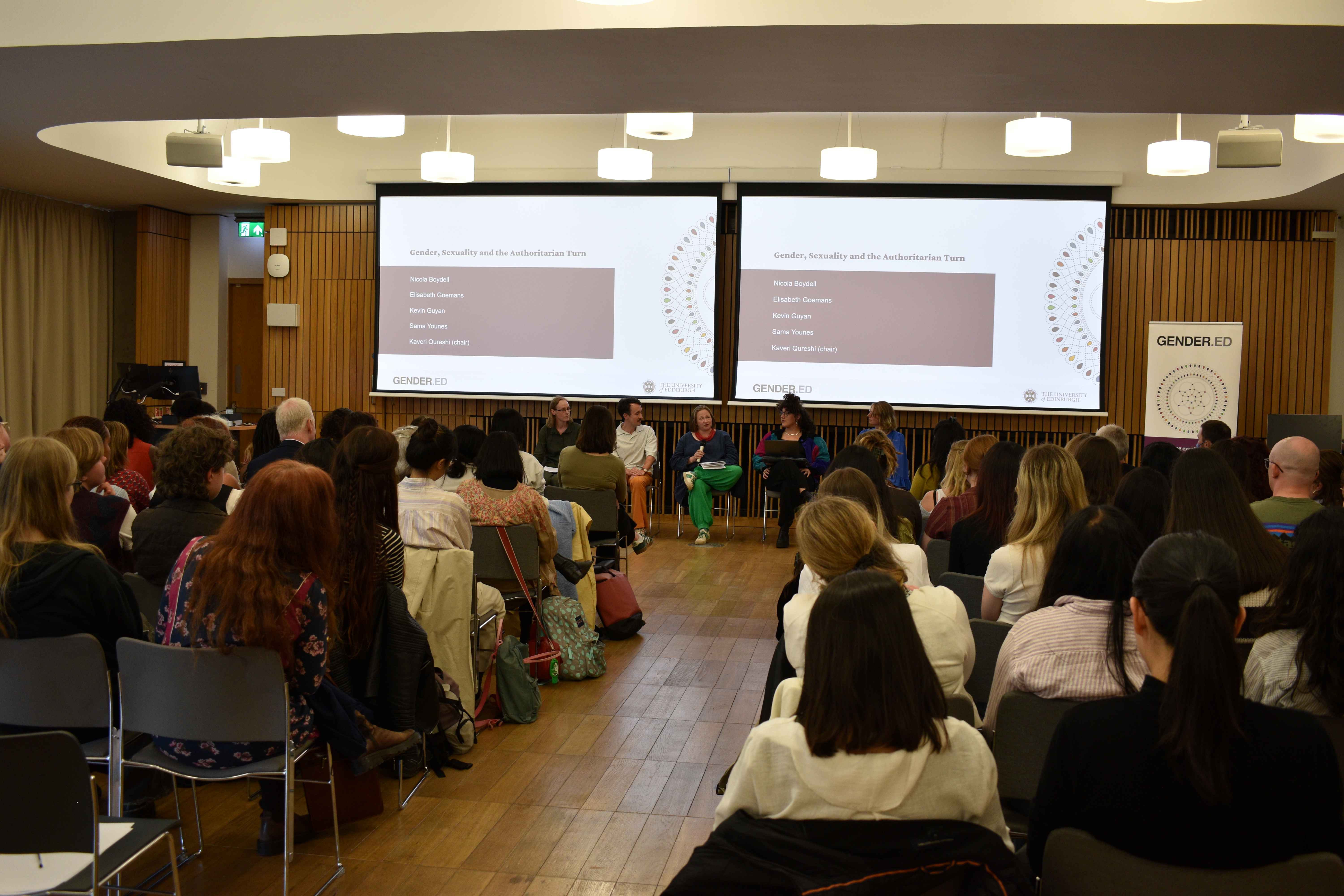
The roundtable discussion, which followed, could not have been on a more important theme: ‘Gender, sexuality and the authoritarian turn’. We heard from four speakers who closely engage with this theme through their research. Dr Nicola Boydell from the Usher Institute, Centre for Population Health Sciences and Centre for Biomedicine, Self and Society spoke about Scottish abortion providers’ sentiment of being under threat and embattled in light of transnational anti-abortion movements emboldened by developments in the USA. Elisabeth Goemans from the School of Literatures, Languages and Cultures spoke about women writers confronting the banning of their books by the right wing in Argentina. Dr Kevin Guyan from the Business School talked about the trap whereby in order to gain recognition and inclusion for their non-normative gender and sexuality, non-conforming people in the UK have to identify with narrow state-endorsed categories in official data collection like the census, following push-back to the more plural, more open, and sometimes more opaque ways in which they would want to identify. Sama Younes from the School of Social and Political Science took the discussion to a completely different plane, departing – as Dr Shaira Vadasaria pointed out in the Q&A – from contexts in which notions of human rights, though infringed, still have some meaning; to the situation of genocidal annihilation in Gaza. Sama's research draws from indigenous and black feminism to reject the exceptionalisation of Palestinian death and the non-valuation of Palestinian life.
 Turning from these urgent discussions, the second half of the event, focused on the research showcase, was also affectively charged. The 22 undergraduate research posters were very inspiring, canvasing students from no less than twelve different degree programmes across the university and highlighting a range of creative methods and data sources, spanning from all different kinds of archival research projects, to discourse analysis of mainstream media, film and anime cartoons, to interview-based projects and ethnography, philosophical argumentation and critical readings. One of my favourites was Illustration student Nayanika Clark’s ‘Mahou Shoujo, women and magic and power, oh my!’, which was visually superb and had a memorable title.
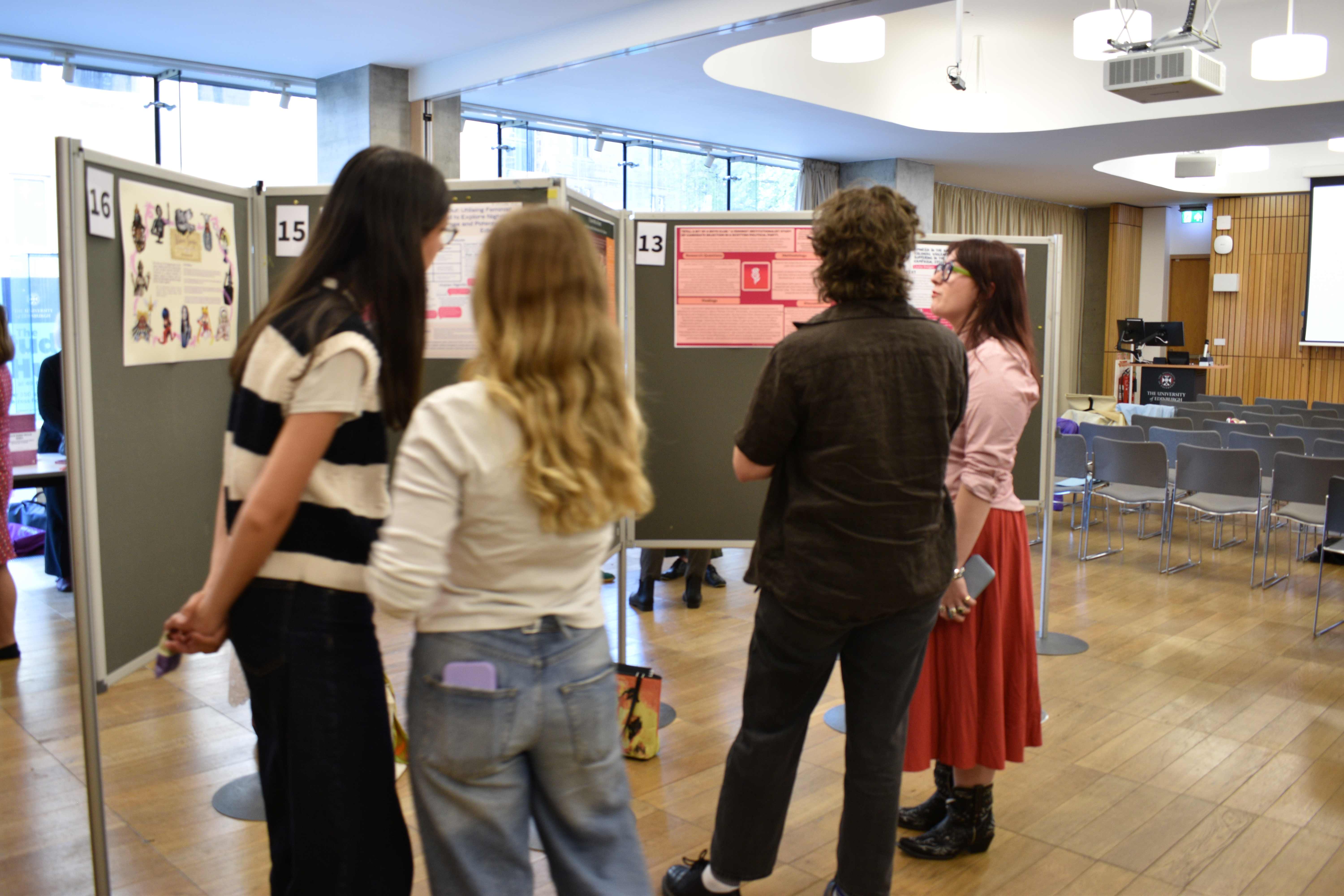
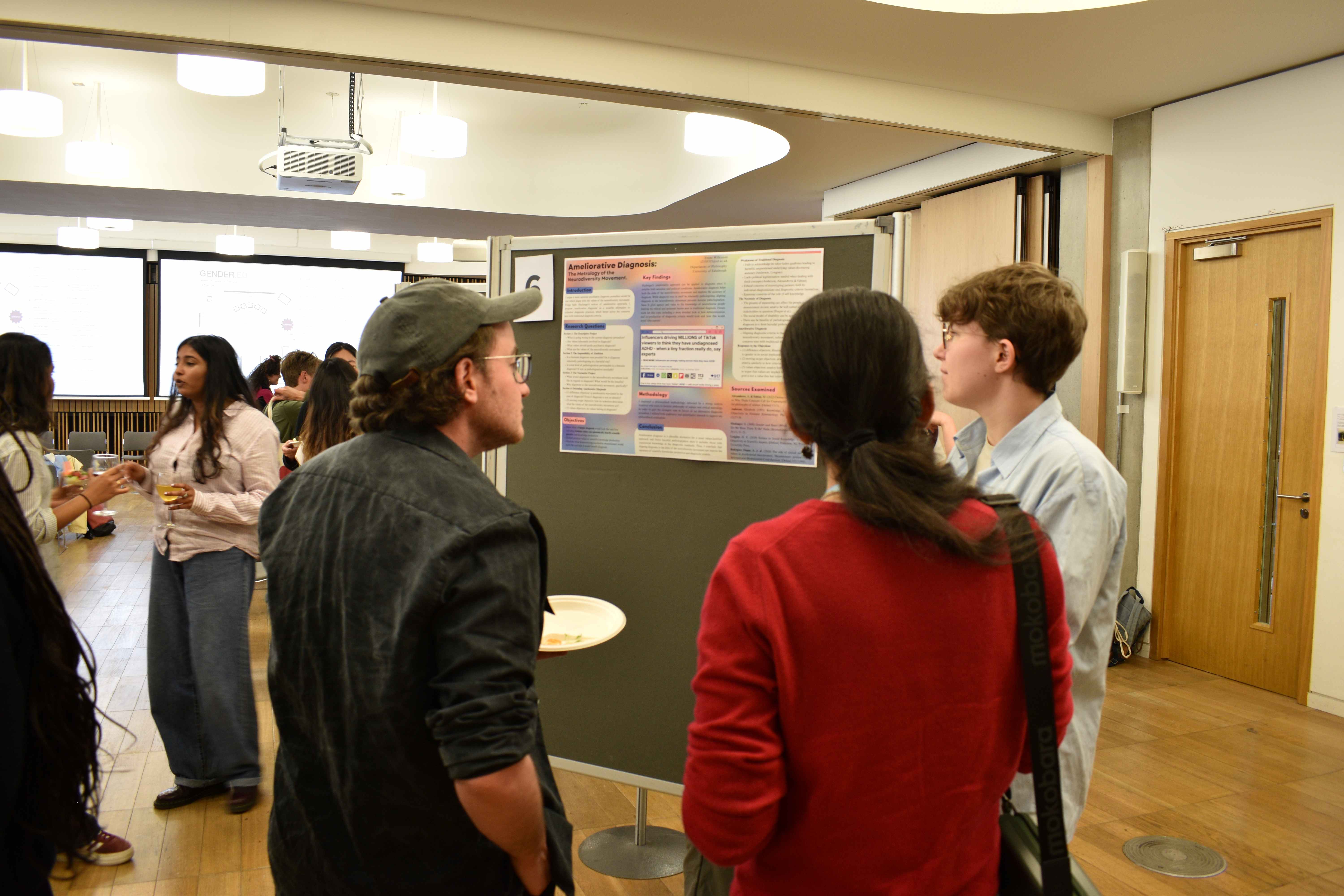 There were also 19 research projects presented by PhD researchers and academic staff, again from across disciplines and career span, including a bumper crop of new books and displays of linguistic models, magazines, flyers and audio-visuals as well as posters.
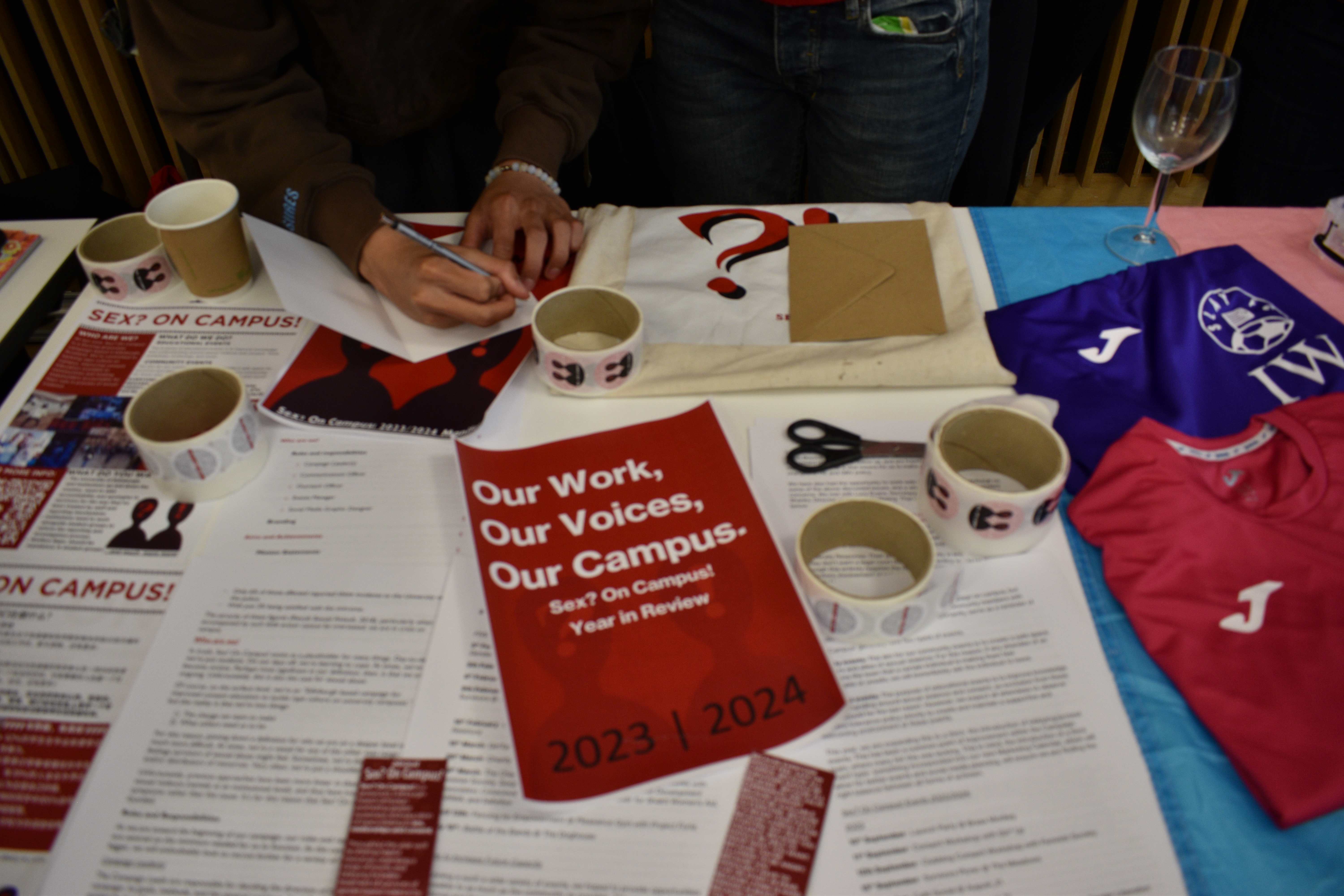
Five student societies – Girl* Up Edinburgh, PrideSoc, Black Women* in Edinburgh, Brown Girl Society and Sex on Campus – demonstrated their change projects. It has been energizing for the GENDER.ED core team to work with these societies and we are sad to see the current cohort complete their degrees and depart from campus. We hope to be able to build as strong relations with the next cohort, too.
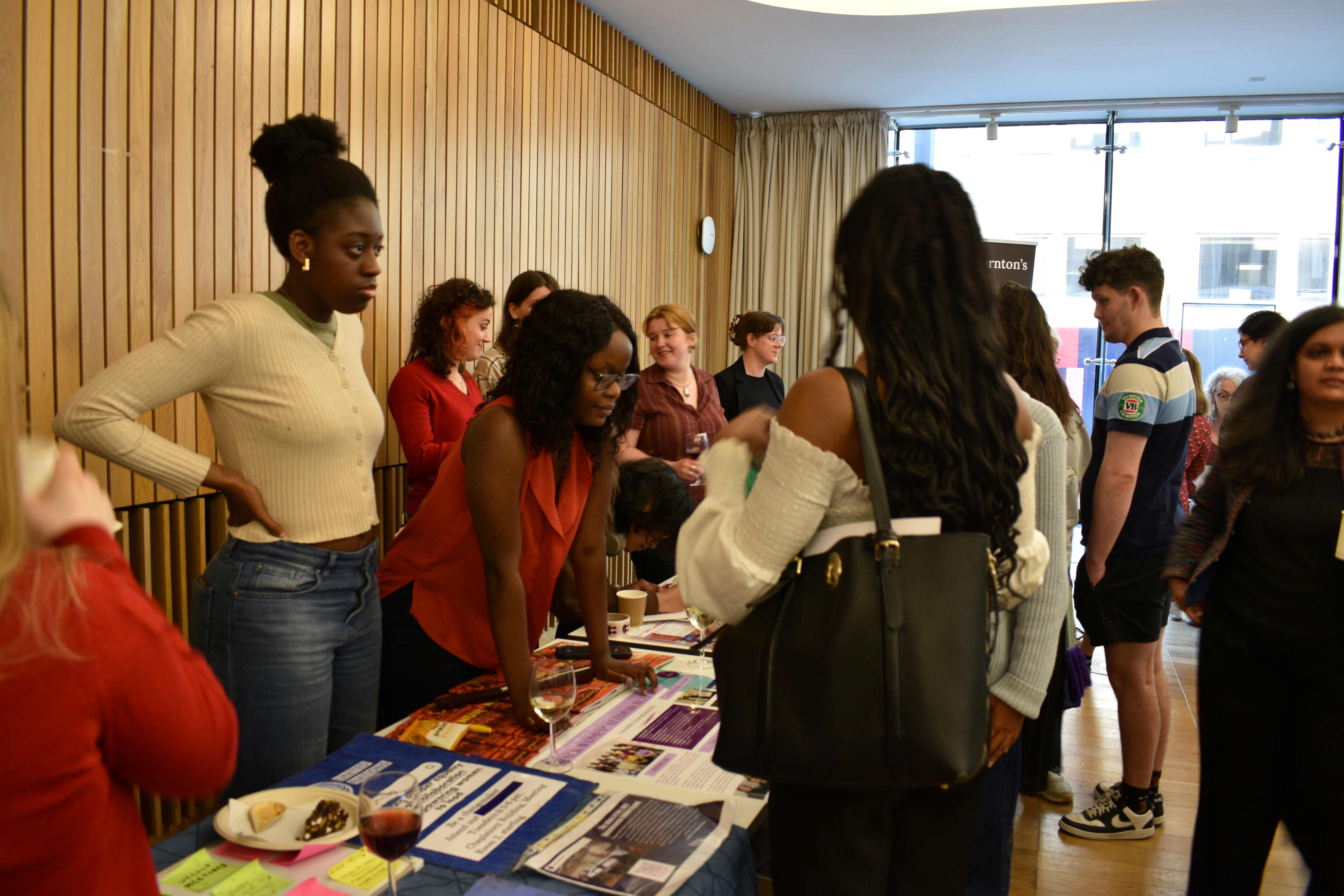 The Showcase is important not just because of the big global developments we come together to think about, but also because of the small-scale connections that can materialise serendipitously. I was moved by a conversation with one participant who expressed amazement to have met kindred souls from corners of the university where they would never have imagined that gender and sexuality research was happening, let alone research that was so generative and inspiring in relation to their own project. Echoing what members described in the most recent Stakeholder Survey, this Showcase participant commented on how, though they sometimes feel alone in doing gender and sexuality research in their own departments, they felt they felt buoyed up in solidarity by encountering others – perhaps people who feel equally lonely in their own units - via the GENDER.ED hub.
Before I close, I want to express particular gratitude to Claire Edminson, our Network Coordinator. The event wouldn’t have happened without your tireless work and meticulous efficiency – certainly not on the larger scale of the event this year. On a personal level, my profound thanks to you Claire. And of course thanks also, to everyone who took part, and collectively made the day so impactful.