
Yuan Changying prize winning essay '23-24
This year’s Yuan Changying Prize in Understanding Gender in the Contemporary World goes to Ariella Glaser (Year 1, MA Sociology and Politics) for a nuanced and innovative analysis with sophisticated arguments, and a lucid and engaging assessment of how the film Killing Eve subverts spy thriller ‘tropes’, bringing in insights from gender studies and queer studies.
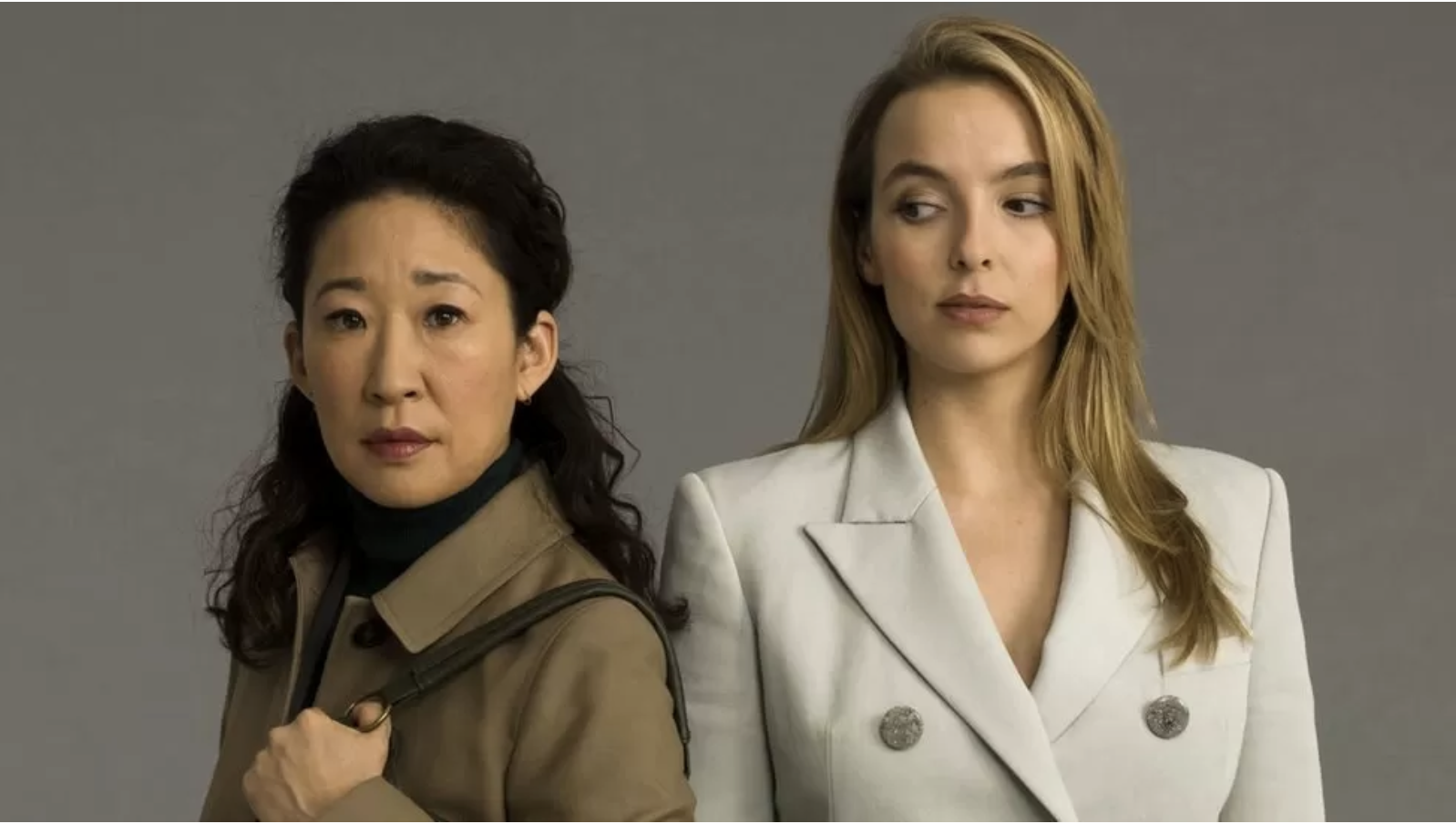
Killing Eve as the Anti Spy Thriller: Subversions of Gender and Sexuality
For centuries the spy thriller genre has been defined by painfully masculine men in outlandish and outdated displays of hegemonic masculinities (Connell, 1995). Killing Eve (most recently released in 2022) is an antidote to this, finally providing a new genre of villains and detectives who refuse to conform to the gendered and heteronormative stereotypes of historical media. Going further than just providing female spies, which even now remain uncommon, Killing Eve, through the lens of the female gaze, presents and allows for complex, violent and assured women, and begins to offer a look at positive female sexuality and queerness (Mulvey, 1975).
Killing Eve offers a new, refreshing portrayal of women in spy thrillers, subverting classical tropes of masculinity and femininity. The genre has been historically overtly masculine, both characterising secret intelligence as male-dominated, through the overwhelming majority of male characters (both heroes and villains), the respective subjugation or relegation of female characters, and creatively the consistent and unconcealed use of the ‘male gaze’ (Braat, 2022; Mulvey, 1975). The presence of ‘hegemonic masculinity’ as a driving force is clear (Cenizal, 2015). Connell (1995) coined the term, positing that while men unite in their domination of women, there exists an interplay and hierarchy of multiple masculinities. This translates to physical violence in this genre where (mainly men) play the principal heroes and villains, with often non-white men appearing as side-kicks, their qualities and insights occasionally useful to the hero or villain, before dying in the precursor to the climactic battle scene, which sees the two (white) principal characters in a face-off. A violent and ‘masculine’ fight scene ensues, and the man we have been told is the hero (although his actions throughout the film are often morally dubious) comes out on top. Baker (2006) regards this as a clear staging of the contest between a hegemonic form of masculinity and other, subordinate forms.
Women, alternatively are consigned to ‘accessory’ status, rarely furthering the plot, instead providing comic relief or more commonly sexual pleasure for both the hero and (voyeuristically) the audience. Further enhancing the domination of men, the female characters are often initially presented as a ‘femme fatale’,seductive, mysterious and dangerous, before being conquered sexually by the hero and ultimately killed off- occasionally sparking a revenge arc, but more frequently left lying forgotten (but still beautifully feminine) in the rubble (Funnell, 2015). This classical presentation conforms neatly into Mulvey’s theory of the male gaze, or scopophilia, which explains mainstream media’s objectification of women to please the preferences of a heterosexual male creator, character and audience (Mulvey, 1975).
The female gaze through which Killing Eve is filmed gives the female characters inherent agency and strength, allowing them to be seen as characters in their own right, with actions and aesthetics not created for the pleasure of male viewers or characters (Belkis, 2020). It is important to note that the female gaze is not a simple reversal of the male, in Killing Eve for example, men are simply refreshingly underrepresented in comparison to women, not subjugated or oversexualised for the viewer's pleasure. Ultimately, the importance of Killing Eve is in the complexity and evilness women are granted, a huge step from the narrow tropes women in spy thrillers were assigned to; it is reminiscent of the moral questionability of some famous male action heroes, illustrated here through the central themes of violence and sex. In the form of morally corrupt and complex female characters- like Villanelle (a ruthless assassin) throughout, and Eve (who discovers a fascination with violence in the later seasons)- the classical purity and innocence of women is subverted and removed. Previously in art, a loss of purity or goodness (corruption) ends a woman’s usefulnesses- marriage and the conformity to societal feminine standards- but here this removal is decided by the woman herself, driving the plot and producing engaging characters.
Killing Eve, through Villanelle, doesn’t shy away from shocking violence, which is distinctly not romanticised or beautified, through prolonged murder scenes, with the same blood and gore present historically in male dominated fight scenes. As Afifi (2018) notes, gratuitous violence against women is ubiquitous in not only the spy genre, but in wide varieties of media and literature, present as a horrifically normalised reminder of men’s inherent dominion. This harmful stereotype directly influences the acceptance or even sexualisation of violence against women in the real world (Malamuth and Check, 1981). Killing Eve entirely subverts this in its ‘unusual’ presentation of female violence against (mostly) men. Crucially, the show doesn’t fall into the trap of hypersexualising violent women, as thrillers with female killers like Kill Bill (2003) and Basic Instinct (1992) do, through creative choices like dialogue, costuming and beauty, positing the women as yes, violent, but still ultimately sexually appealing. Killing Eve doesn’t shy away from sexual interplay, many of the murders Villanelle commits are creative, and occasionally sexually degrading for the male victim. In an Amsterdam brothel, Villanelle dresses herself in a hyper sexualised dirndl to lure a philandering husband in, before ruthlessly subverting the normative power of the man in prostitution by gutting and hanging him in the window (2:4) (Bradley, 2019). Later, Villanelle dresses a victim in a dress, before suggestively arranging his body on a bed, and castrating him (1:5). This act ridicules the victim’s masculinity, and its uncomfortability highlights the ease in the previous sexualisation of violence against women. This act also draws parallel to the ‘femme castratrice’, or the monstrous feminine, who desires to not only disrupt the individual life and masculinity of her victim, but threatens to disrupt the accepted power of the patriarchy itself (Creed 1993, in Miller, 2021). This arguably relates to Freud’s ‘castration anxiety’, or the early fear of emasculation, physically and symbolically (Freud, 1909). These crafted, violent acts therefore physically and metaphorically place Villanelle (and women) in power, emasculating and subverting men’s traditional domination over women, and their gratuitous sexualisation of them in the media.
Costuming plays a key role in the subversion of the stereotypes of femininity in Killing Eve. As Soloway (2016) emphasises, the male gaze refers not only to the way men treat (or see) women in films, but by how the often male creatives present their female character. Mulvey (1975) introduces a prominent characteristic of fictional women: ‘to-be-looked-at-ness’, an unnatural quality where women style themselves as if deliberately (sexually) appealing to an invisible male audience. Eve rejects this quality, and is costumed in an unglamorous, unsexualised way- with dark colours and ‘unfashionable’ outlines- she is a normal working woman, not heightened to appeal to an audience, or in fact her husband. The simplicity and practicality perhaps also represent her discipline and commitment to her work, often granted to fictional men. This is decisively contrasted by Villanelle. This allowance of a variety of women in the show is key, previously female characters were homogenised in their sexualisation and stereotypical femininity (Funnell, 2015). Villanelle wears a huge range of flamboyant costumes, ranging from distinctly feminine, pink dresses, to more typically masculine suits. The importance of this range is that neither hyper masculine or hyper feminine presentations inhibit or augment her violence- her display of self or gender is not important to the plot, and not created for the viewer. Instead, it is important when she chooses it to be, like when she dons costumes, or even accents and personas, in order to aid her violence (Miller, 2021).
In historical spy thrillers, the woman’s sexuality defined her character, her purpose in the plot was to provide sexual pleasure for the male character and audience (Carroll, 1990). It is important to question, therefore, if Killing Eve, a show which at its centre contains a story of desire and love, manages to break free of this harmful sexualisation. The lesbianism at the core of Killing Eve is particularly vulnerable to fetishisation, as through a combination of the ‘symbolic annihilation’ of romantic queer relationships in media, and the perpetuation of harmful stereotypes in pornography, women-loving-women relationships, when written poorly, can fall prey to male heterosexual sexualisation (Gross and Gerbner, 1976; Puhl, 2010). Killing Eve however, essentially does manage to escape this trap, perhaps through the lack of many distinct sex scenes. Sexual desire is more often implied, rarely gratuitous, and therefore less easy to fetishize, while still presenting an engaging portrayal of queer love. The success of this may be due to the assuredness both characters hold in their sexuality by the end of the series. The drama of the relationship is that it is between a spy and an assassin, not because they are queer. This deemphasized and rather inherent queerness is refreshing in a society where often queerness is the defining/singular factor in a fictional relationship, rather than a natural feature to build upon.
Ultimately, Killing Eve is successful in its subversion of femininity, and reworking of an outdated and misogynistic genre. Through the female gaze, women are granted untypical agency and complexity, and their sexuality is nuanced and engaging, without succumbing to sexualisation. Most critics agree on this positive representation throughout the series, but view the death of a notable queer character (avoiding spoilers…) in the last episode (4.8) as succumbing to the annoyingly prevalent, and potentially homophobic, ‘Bury Your Gays’ trope, where an unfortunate number of queer characters wind up dead by the end of the story (Blaga, 2022). This implies a refusal to portray queer relationships as ultimately successful and happy. In the future perhaps, we can look forward to more optimistic and hopeful representations of queer love.
Bibliography
Afifi, N. (2018) ‘Spotting Gratuitous Violence Against Women in Fiction’, Nadia Afifi, 19 March [Blog]. http://www.nadiaafifi.com/blog/spotting-gratuitous-violence-against-women-in-fiction (Accessed 19 March 2018)
Baker, B. (2008). Masculinity in fiction and film : representing men in popular genres, 1945-2000. London ;New York: Continuum, , Cop.
Basic Instinct (1992) Directed by Paul Verhoeven. Studio Canal.
Belkis (2020) ‘Killing Eve and the female gaze’, Medium, 25 May [Blog]. https://iambelkis.medium.com/killing-eve-and-the-female-gaze-60867a118783 (Accessed 4 December 2023)
Blaga, S. (2022) ‘“Bury Your Gays” in BBC’s Killing Eve?’, Student Press, 10 May [Blog]. https://studentpress.ro/2022/05/10/bury-your-gays-in-bbcs-killing-eve/ (Accessed 4 December 2023)
Braat, E. (2022) ‘The Construction of Secret Intelligence as a Masculine Profession’, International Journal of Intelligence and CounterIntelligence, 35(4), pp. 694-712.
Bradley, L. (2019) ‘How Killing Eve Concocted Its Craziest Murder Yet’. Vanity Fair, 12 Nov. https://www.vanityfair.com/hollywood/2019/04/killing-eve-season-2-villanelle-murder-pig-mask
Carroll, N. (1990) ‘The Image of Women in Film: A Defense of a Paradigm’, The Journal of Aesthetics and Art Criticism, 48(4), pp. 349–360.
Cenizal, P. M. (2015) ‘BOND...(THE HEGEMONIC MASCULINITY OF) JAMES BOND’. https://www.semanticscholar.org/paper/BOND...(THE-HEGEMONIC-MASCULINITY-OF)-JAMES-BOND-Cenizal/23ea95767d8041c7e64fbb502389fd60acb0f036
Connell, R.W. (1995). Masculinities. Cambridge Polity.
Creed, B. (1993) The Monstrous-Feminine: Film, Feminism, Psychoanalysis. London: Routledge.
Freud, S. (1909) ‘Analysis of a phobia in a five-year old boy’. In J. Strachey (Ed. & Trans.), The standard edition of the complete psychological works of Sigmund Freud (Vol. 10, pp. 1–150). London: Hogarth Press.
Funnell L. (2015) For His Eyes Only: The Women of James Bond. New York: Wallflower Press.
Gerbner, G. and Gross, L. (1976). Living with Television: The Violence Profile. Journal of Communication, [online] 26(2), pp.172–199. doi:https://doi.org/10.1111/j.1460-2466.1976.tb01397.x.
Kill Bill (2003) Directed by Quentin Tarantino. Miramax.
Killing Eve. (2018-). BBC Three, 15 September.
Malamuth, N.M. and Check, J.V.P. (1981). The effects of mass media exposure on acceptance of violence against women: A field experiment. Journal of Research in Personality, 15(4), pp.436–446. doi:https://doi.org/10.1016/0092-6566(81)90040-4.
Miller, A., Atherton, C and Hetherington, P. (2023) ‘Agents of Chaos: The Monstrous Feminine in Killing Eve’, Feminist Media Studies, 23(4), pp. 1802-1818.
Mulvey, L. (1975). Visual Pleasure and Narrative Cinema. London Afterall Books.
Puhl, K. (2010) ‘The eroticization of lesbianism by heterosexual men’. WWU Graduate School, Collection. 57. https://cedar.wwu.edu/wwuet/57
TIFF Talks (2016). Jill Soloway on The Female Gaze | MASTER CLASS | TIFF 2016. YouTube. Available at: https://www.youtube.com/watch?v=pnBvppooD9I.