GENDER.ED - EUSA Undergraduate Feminist Trailblazer Awards: Honourable Mention
This year marked the second year of the GENDER.ED - EUSA Undergraduate Feminist Trailblazer Awards. The awards seek to recognise extraordinary commitments to feminist scholarship and change on campus. This year saw a range of nominations from students and staff, which were considered by a panel of judges from GENDER.ED and EUSA. This year the judges consisted of Meryl Kenny (GENDER.ED steering committee member and convenor of GENDER.ED’s flagship course, Understanding Gender in the Contemporary World). Radhika Govinda (Director of GENDER.ED), Hemangini Gupta (Associate Director of GENDER.ED) and Sam Maccallum (former EUSA VP Education).
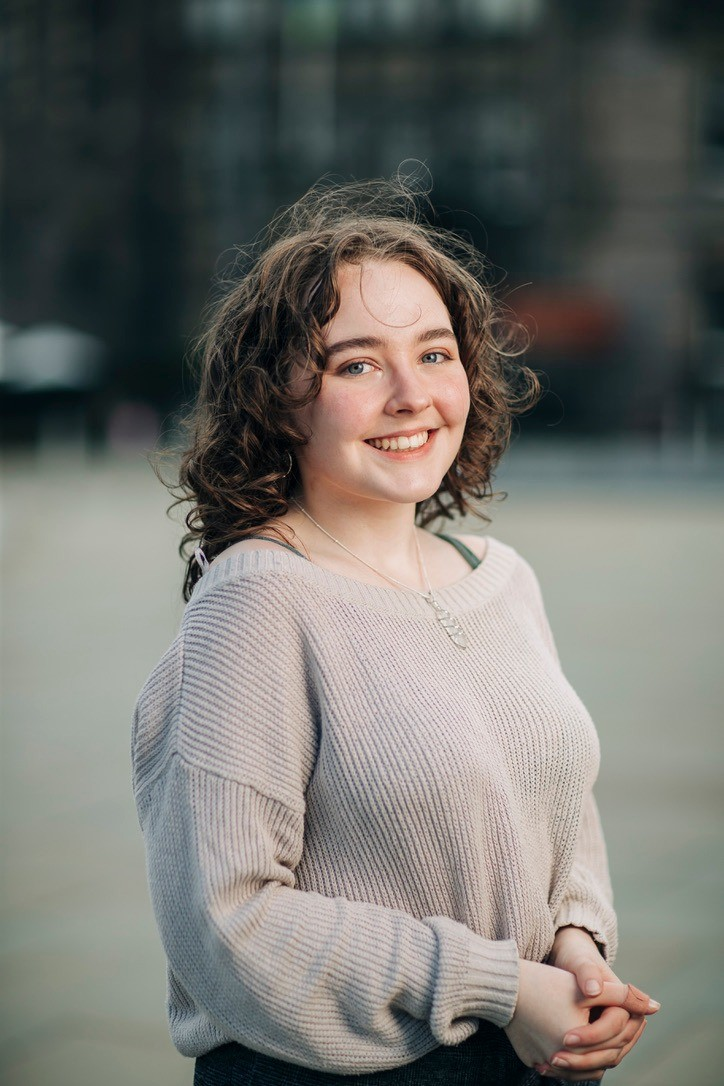
Hope Conway Gebbie (Sociology and Politics 4th year) received an honourable mention for her inspirational advocacy work around sexual violence and reproductive justice
Here are some of Hope’s thoughts on questions posed to her by GENDER.ED’s Communications and Events Intern, Amy Life
1. What motivates you to further the feminist cause?
I have a strong sense of justice which is why I have such a strong affinity for feminism and have since I was a child. However, I have often felt detached from womanhood, and find that much of my identification with it stems from my experiences of misogyny. For me, therefore, the struggle against patriarchal oppression has, for a long time, been a large part of my understanding of and relationship with my gender. This lens is likely where much of my perception of the world comes from and fuels my outrage at injustice and my desire to push for change.
Much of what motivates me to further the feminist cause therefore stems from the way injustice makes me feel. Throughout my academic career I have further familiarised myself with feminist theory, which informs my actions and has refined my understanding of inequality, but ultimately, I'm motivated by the "that's not right" feeling I get when I see or hear about injustices.
2. What advice would you give to other feminists and students wanting to get involved in activism at the University?
I would strongly encourage them to go for it! More specifically, I would advise them to connect with one (or more!) of the various feminist groups on campus, whether that's FemSoc, Girl* Up, Sanitree, etc. The feminist community within the University of Edinburgh is really diverse, and I'm delighted to have seen so many different groups come together to collaborate alongside the Women's Liberation Campaign this past year. Once you've got involved with a group (or groups!) it's really easy to engage in on campus activism.
3. Who else would you consider to be a ‘feminist trailblazer’?
There are, of course, a number of fantastic feminist trailblazers across the world I could name, but I would like to keep it local. Within the University of Edinburgh, I would name Aarti Mukhedkar and Sharessa Naidoo in particular as trailblazers within our community. I've had the pleasure of working with both throughout my time as Women's Liberation Officer and their passion and persistence is truly inspiring – I'm delighted that they've been recognised by GENDER.ED! Aarti's tireless efforts to pursue justice for survivors of sexual violence at the University of Edinburgh is why I ran for Women's Officer in the first place – as a survivor myself, the MeToo Edinburgh campaign resonated with me and prompted me to get involved with student activism. Sharessa's time as Girl* Up President saw the introduction of Consciousness Raising Spaces for women of colour, which I am incredibly supportive of – intersectionality is important to me as a feminist and informed my work as Women's Officer. To me, this includes promoting spaces and conversations centering the experiences of women experiencing intersectional oppressions.
While Aarti and Sharessa have now graduated, there are a number of wonderful students doing feminist work at the University of Edinburgh. I'm honoured to support Kirsten Hay and Kate Wilson's upcoming Sex On Campus campaign this year to continue fighting against rape culture at university, in the role of Communications Officer, and hope to continue working with the terrific changemakers on campus including Gender Liberation Society's founding President Julia Conti and the wonderful Grace Clark.
4. At the moment it can sometimes feel like we are moving backwards as opposed to progressing, what gives you hope that feminism can succeed?
The backlash from the reactionary right in recent years has been incredibly troubling, and it has been incredibly disheartening to see the undoing of feminist, anticolonial, and queer liberation work, to name just a few. It is somewhat comforting to know that this is the work of a well-organised and vocal minority, rather than being reflective of the will of the general population, but unfortunately this rhetoric is spreading. I am hopeful, therefore, that with effective organising we can push back against this onslaught of hate – I've already seen this on a local scale as multiple feminist societies at the University of Edinburgh came together this year to launch the Survivors Collective in response to the University's inaction on sexual violence. As digital technologies – especially social media – enable us to communicate with people around the world it is entirely possible for effective feminism campaigning to reach quite literally billions and form global coalitions to further our collective goal of toppling all systems of oppression.