
GENDER.ED - EUSA Undergraduate Feminist Trailblazer Awards: 3rd Prize
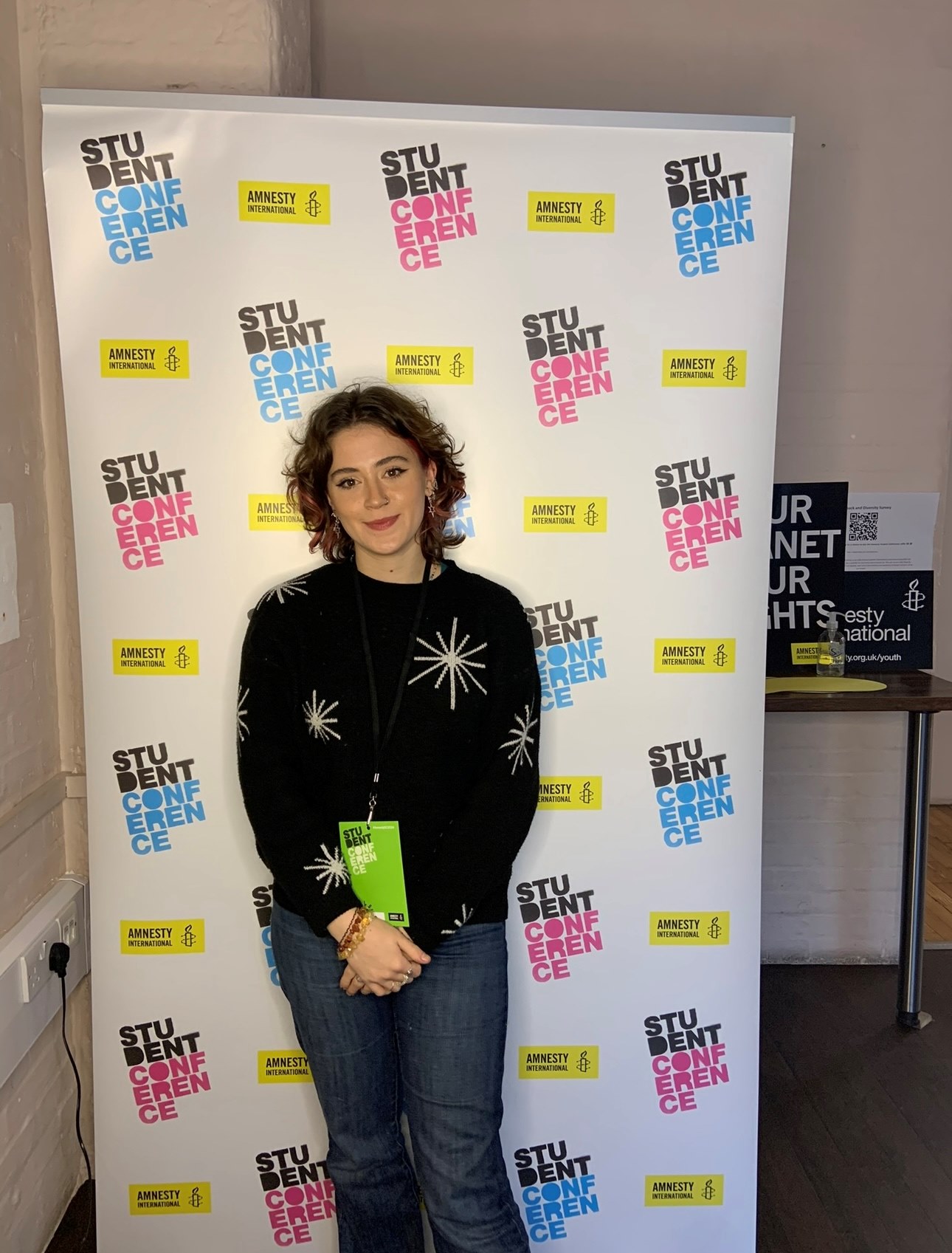
Kate Wilson, one of the winners of 2024’s GENDER.ED-EUSA Undergraduate Feminist Trailblazer Award 3rd Prize.
Image credit: Sex? On Campus!
2024 marks the third year of the GENDER.ED-EUSA Undergraduate Feminist Trailblazer Awards. The awards seek to recognise extraordinary commitments to feminist scholarship and change on campus. The winners of 2024’s GENDER.ED-EUSA Undergraduate Feminist Trailblazer Award 3rd Prize are Kate Wilson and Kirsten Hay, a fourth-year student in Linguistics and English Language and a third-year student in French and Italian, respectively. Kate shared their thoughts on feminist work and what motivates them with us.
What does feminism mean to you?
As a blanket definition, feminism to me is a multi-disciplinary commitment to advocating for the equality of genders across every aspect of life. On the surface, this might be in challenging the most obvious societal norms that perpetuate discrimination and injustice. On a deeper level, I think feminism is about more than simply tackling injustice, but acknowledging the many lenses through which injustice can manifest. It recognizes that gender inequality does not operate in isolation but is intertwined with other forms of oppression—such as race, class, sexuality, and ability—creating a web of systemic issues that must be unravelled. Many of our beliefs, actions, and even subconscious thoughts are shaped by the skewed education systems and cultural norms we look to fight. Feminism, then, is not just a movement for equality, but a transformative practice we may use to reconstruct our socio-political systems from the ground up.
What motivates your feminist work?
I think there are two main reasons that are both inextricably linked. The first is- quite naturally- my own experiences with Gender-Based Violence. Activism has been an incredibly cathartic, incredibly healing process for me that has forced me to more deeply evaluate that which I’ve been through, and the way people around me have responded to it. The latter is the fervent belief I hold that the world we live in, the institutions under which we live, and the campuses many of us study or work on, do not need to be this way. By “this way”, I refer to both the subtle (and arguably, not so subtle) perpetration of GBV, that demonises and punishes survivors for speaking even quietly about their experience, and awards privilege to perpetrators. While we’ve seen some change, there’s infinite room for improvement, especially at an intersectional level. I’m definitely not saying it will be simple, or that we won’t have to continue fighting tooth and nail, but that we who feel able to owe it to ourselves as survivors of these systems to try.
Who else do you consider a ‘Feminist Trailblazer’?
I’d probably consider every other person fighting against injustice on campus a Feminist Trailblazer! The extent to which GBV for example has been ignored within student communities is worrying and damaging, and we have a lot of lost time to make up for, with unfortunately plenty of alumni with testimony to give. I’m lucky to be studying at a time where the tides are beginning to turn and students are looking to more radical action toward their universities as a means of securing change, but I remember even a few years ago it felt as if few student groups on campus were talking about, or acting radically toward the issue of GBV. I think that’s why alumni like Aarti Mukhedkar are always at the forefront of my mind when answering questions like this- she was so instrumental in the activism I do now. Perhaps if the University had committed sooner and in a far greater way to protecting its students, Sex? On Campus would have no reason to exist.
In your opinion, what does a feminist utopia have that our current society is lacking?
Without a doubt, it’s accountability! I think this obviously applies to perpetrators of violence, but equally for those who in any way endorse it. I think everyone should take time to reflect on their reactions to survivor testimonies, and the resources we have equipped ourselves with to better support them and help them in finding that justice. The indiscriminate nature of violence reminds us clearly of what we owe with regard to campaigning for and supporting all survivors. We owe it to them to build a toolbox, enraged and radical- though feasible and realistic, to ensure our own long-term sustainability- effective for deconstructing the institutions promoting violence and defending perpetrators, and supportive and believing of those that confide their experiences. Only then can we truly recognise the scale of the anti-feminist institution under which we live, and act accordingly in a unified way.