
GENDER.ED - EUSA Undergraduate Feminist Trailblazer Awards: 1st Prize Winner
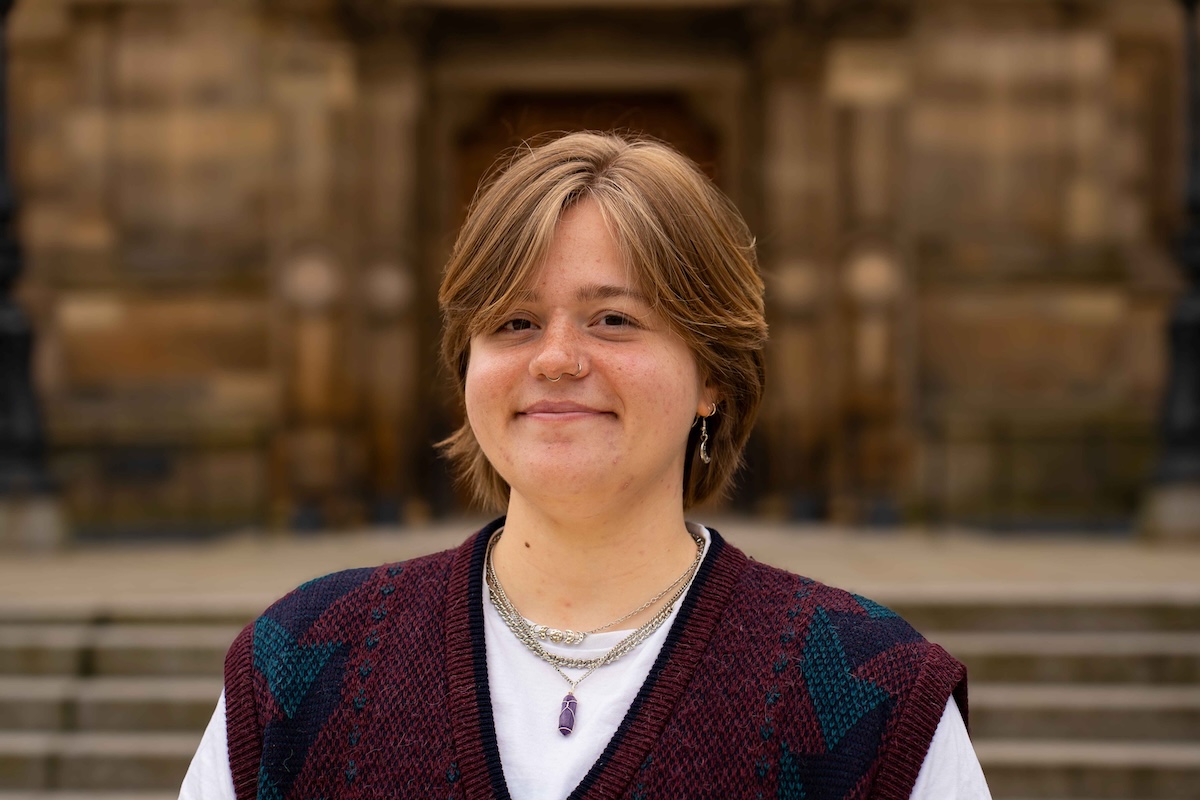
Portrait photo of Ash Scholz, EUSA Undergraduate Feminist Trailblazer Awards 1st Prize Winner.
Image credit: Ejay (@photogrejay)
2024 marks the third year of the GENDER.ED-EUSA Undergraduate Feminist Trailblazer Awards. The awards seek to recognise extraordinary commitments to feminist scholarship and change on campus. The winner of 2024’s GENDER.ED-EUSA Undergraduate Feminist Trailblazer Award 1st Prize is Ash Scholz, a fourth-year student in MA (Hons) History and Politics. We asked Ash to share their thoughts on feminist work and what motivates them.
What does feminism mean to you?
What a question to start with! There are so many 'definitions' and interpretations of feminism, from feminist philosophers to the interpretation of feminism of my mum when she makes my dad cook dinner. There can't be one, universal definition of feminism, because we all experience oppression and discriminatory structures differently, and so the meanings that we connect to feminism can't be all the same. For me, I think feminism is the response to the oppression that people experience because of a multitude of intersectional factors, but often to do with their gender identity or expression, me included. It is about reckoning with the fact that discrimination and violence is directed toward some bodies more than others. This is all quite abstract, but feminism for me is this combination of wanting to see change on a big 'abstract' level, in the societal perception of gender, but it is also deeply personal. It's this feeling I had when I was a child and my teacher told me I shouldn't play football because it's a 'boy's sport', but I did it anyways. It's being unapologetically myself and not conforming to gender roles. It's using the anger that I feel about my own experiences of discrimination and violence, while looking beyond the end of my own nose and fighting like hell for all oppressed people, because all our struggles are interconnected. It's genuinely listening to the experiences of the people around me and wanting to make their lives, and the lives of future generations, not merely a struggle for survival. It's having empathy. It's experiencing community, collectively caring for one another, not just despite, but because of our differences. That's my interpretation of feminism.
What motivates your feminist work?
I think my motivation comes from a deep place of gratitude. I remember being 13 and feeling quite isolated while coming to terms with my queer identity, but the community welcomed me with open arms. I found my chosen family, a space where I can truly be myself and could explore my identity without constantly being afraid. I honestly don't know where I would be today if I hadn't experienced this support. But I know that this bubble of queer joy is very fragile, and as marginalised identities, we have constantly been silenced, overlooked, and not been able to express ourselves freely. I want to be able to change this, so that every single scared 13-year-old has the opportunity to experience this feeling of community. And I think that queer liberation cannot happen without feminism, and vice versa. As I said in the question before, all our struggles are interconnected. Trans people of colour have taught me the importance of moving beyond conformity. My chosen family has shown me that queer joy is one of the most important forms of activism. And the inspiring women in my life have taught me resilience and hope. Through them, I have found the motivation to keep going, and I want to give back to this wonderful, patch-worked community that I have had the privilege to build over the past years.
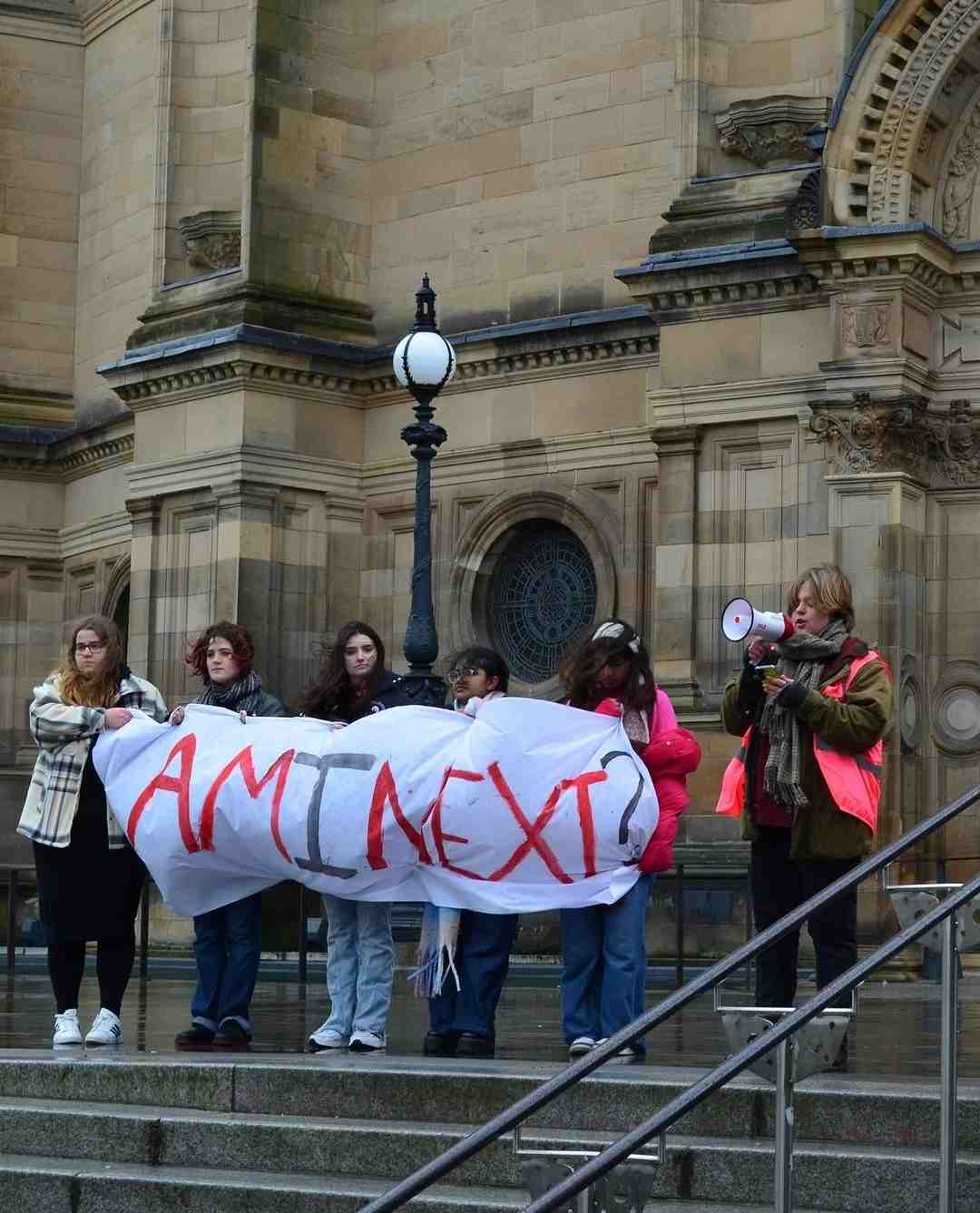
Image credit: Salma Balde
Who else do you consider a ‘Feminist Trailblazer’?
I'm inspired by so many people on a daily basis, so it's very hard to name only a few! I guess in terms of historical or "famous" figures, I want to name Marsha P. Johnson and Sylvia Rivera, who were trans activists at the forefront of the Gay Liberation Front activism in New York City and founded the Street Transvestite Action Revolutionaries (STAR), a group dedicated to helping homeless young drag queens, gay youth, and trans women. The feminist text that is the most thought-provoking to me, though, is Audre Lorde's "The Master's Tools Will Never Dismantle the Master's House", because it offers the question if, in order to liberate marginalised communities, we need to tackle the Master's House (oppressive systems) with our own tools, or whether the master may have appropriated certain tools over time, but that we can find ways to reclaim those tools for our own benefit.
But during my time at the university, I have also met so many feminist trailblazers in our community here. There is Aarti Mukhedkar, whose tireless efforts to provide better support survivors of sexual violence at the university have made such a huge impact over the past few years, along with the whole team behind Sex? On Campus campaign, which I'm so proud to be a part of. Also, Jaime Prada, who has shown the university community how much power lies in the act of celebrating queer joy, Robyn Woof, who is probably one of the fiercest campaigners that I know, and Lauren Byrne, who has been such a steady advocate for a positive change in student welfare over the past two years. I feel so honoured to be a part of this changemaking community on campus.
In your opinion, what does a feminist utopia have that our current society is lacking?
Okay, this might be a very simple thing, but the answer that immediately popped into my head is "Actually Listening and Understanding Each Other", and empathy. I think in our current society, we are all so incredibly caught up in our own survival, while also experiencing this prescription to 'be successful', which often happens at the expense of others. And I'm not saying that this is anyone's fault, but creating the time and space to listen to each other's stories and experiences and wanting to understand their point of view is not often on anyone's agenda. And that's when prejudices turn into hate and discriminatory actions, as we can see in the current far-right riots, the infringement of trans people's rights here in the UK, or the genocide happening in Palestine. In a feminist utopia, or at least in my feminist utopia, people would be able to spend time coming together, learning from each other, and ignorance and prejudice would not be able to take hold.