
GENDER.ED - EUSA Undergraduate Feminist Trailblazer Awards: 1st Prize
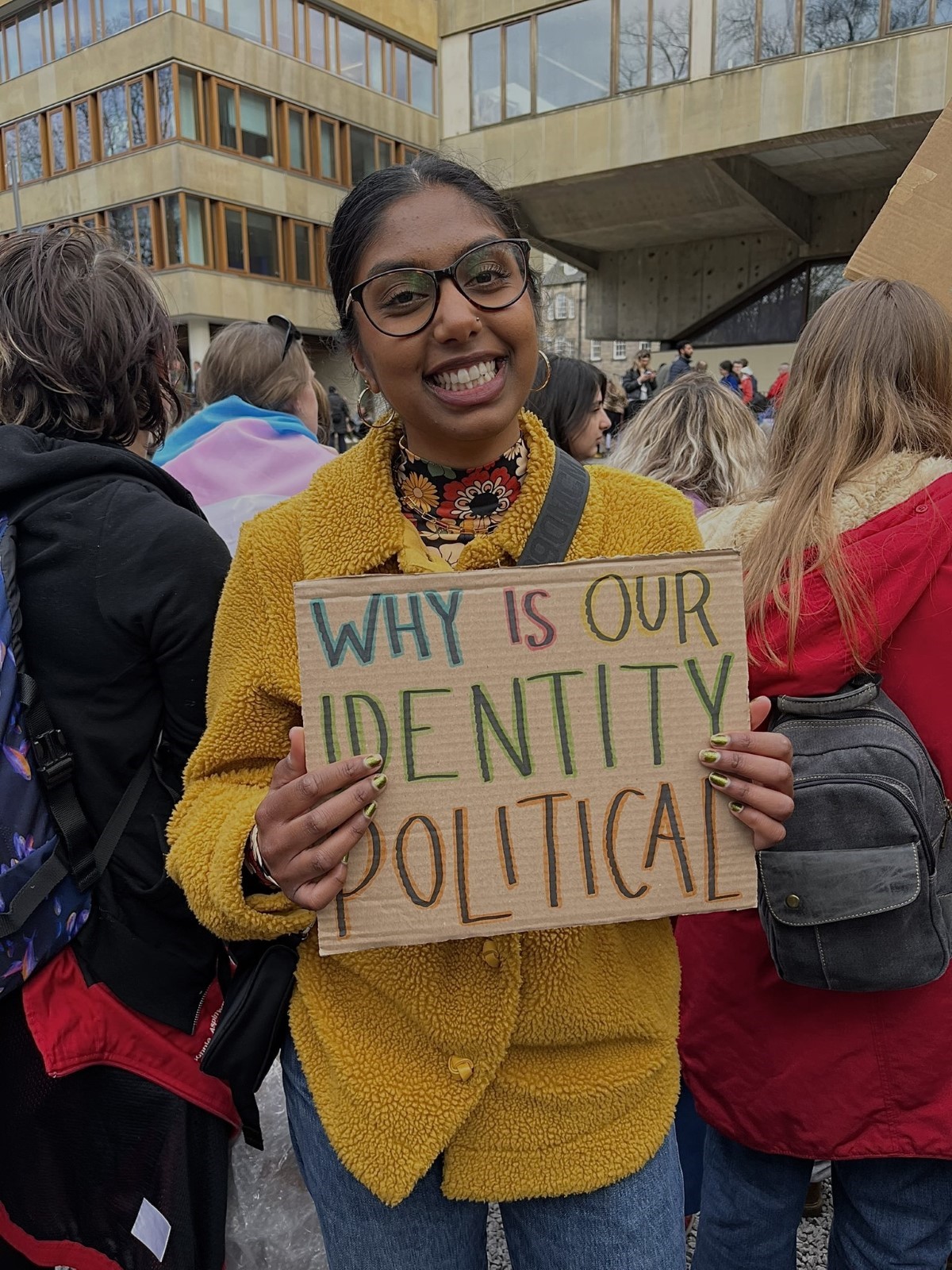
2023 marked the second year of the GENDER.ED - EUSA Undergraduate Feminist Trailblazer Awards. The awards seek to recognise extraordinary commitments to feminist scholarship and change on campus. This past year saw a range of nominations from students and staff which were considered by a panel of judges from GENDER.ED and EUSA. The judges consisted of Meryl Kenny (GENDER.ED steering committee member and convenor of GENDER.ED’s flagship course, Understanding Gender in the Contemporary World). Radhika Govinda (Director of GENDER.ED), Hemangini Gupta (Associate Director of GENDER.ED) and Sam Maccallum (former EUSA VP Education).
The winner of 2023's GENDER.ED-EUSA Undergraduate Feminist Trailblazer Award was Sharessa Naidoo (Maths and Philosophy, 4th year). In her time at Edinburgh, Sharessa was a powerful force for gender equality on campus, particularly through her work as President of Girl*Up, #MeToo Edinburgh and the BlackED Movement. Nominators particularly commended her intersectional practice, including regular consciousness raising circles for BME women and gender non-conforming people.
Here are some of Sharessa’s thoughts on questions posed to her by GENDER.ED’s Communications and Events Intern, Amy Life:
1. What motivates you to further the feminist cause?
Ever since I was little, my parents instilled in me the value of hard work and showing others respect. However, as I became older, I realised because of my race, gender and identity that certain opportunities would never be available to me no matter how hard I worked or how much I respected others. This opened my eyes to the immediate and global power structures that exist, like the patriarchy. By meeting the people I have through my work in Girl* Up, and studying social issues in Philosophy, I’ve come to see that we can resist power structures by working together. Individually we don’t necessarily have the answers to specific issues, but together we can make significant progress! Therefore, the potential for collaboration motivates me to further the feminist cause.
2. What advice would you give to other feminists and students wanting to get involved in activism at the University?
During my time at UOE, my perception of feminist issues continued to change for the better. Initially I was very interested in issues I personally faced, where I mostly took for granted my immense economic privilege. University has opened my eyes to more serious issues that occur beyond my life linked to hunger, poverty, war and domestic violence. I am grateful for this shift in perception! The biggest advice I would give those wanting to get involved in activism at UOE is to stay open-minded continually and to persistently think critically about what social change you want to contribute towards and why. Effective social change-making happens when you’re not afraid to challenge what you know and to uplift or make room for those that are better equipped to direct the social change you’re passionate about. Any change must genuinely serve those the change is intended for, and I thus believe that constructively getting involved in activism at the UOE would require you to either help develop or find organisations that genuinely serve marginalised groups.
3. Who else would you consider to be a ‘feminist trailblazer’?
My mother is a true icon! And yes I am biased!! She is making monumental strides for human and women rights in the mining industry worldwide. She is an advocate for sustainability, and I am very lucky to be related to such a trailblazer. I am inspired by her big and small actions. More definitively, I consider my mom a trailblazer for two reasons. She has taught me that no change is too small and helping someone with something they’re struggling with is as important as leading a group aimed at helping many. She’s also shown me the value of ‘failing fast to learn fast.’ I have thus come to believe that the best social change spaces are ones that hold others accountable but aren’t judgmental, as effective social change-making is not merely about maintaining respectability politics but ensuring we try our hardest to perform best practice always. No person can represent and tackle a social issue 100% correctly. They are human and they’re bound to make mistakes, but our ability to make mistakes shouldn’t give us fear to not try eliminating social issues. Rather, this should give us reason to continue trying and collaborating with good intention. This is because learning requires mistakes and genuine social change-making requires learning. More so, I am inspired by all my family members that have come before me - my ancestors of Indian origin that took the brunt of apartheid in South Africa. They’ve given me the opportunity to make feminism a part of my life. They are trailblazers.
4. At the moment it can sometimes feel like we are moving backwards as opposed to progressing, what gives you hope that feminism can succeed?
Inspiring lecturers! I’ve had a few lecturers over my four years open my mind up in unexpected ways to think about social issues completely differently to the norm. One such lecturer is Prof Tommy Curry. Among other things, he's allowed me to express philosophical thoughts about black liberation as experienced in my home South Africa in an academic setting - something first year me could never have dreamed of. More so, he’s made me rethink about what BME women and people at large need to thrive and how exactly mainstream feminism excludes them. Such discussions can be uncomfortable at first because they require questioning your own beliefs. However, I gain hope for feminism whenever I witness people willing to engage in such thoughtful and uncomfortable conversations. For me, such people include my Girl* Up family and members, my flatmates, my family and friends.